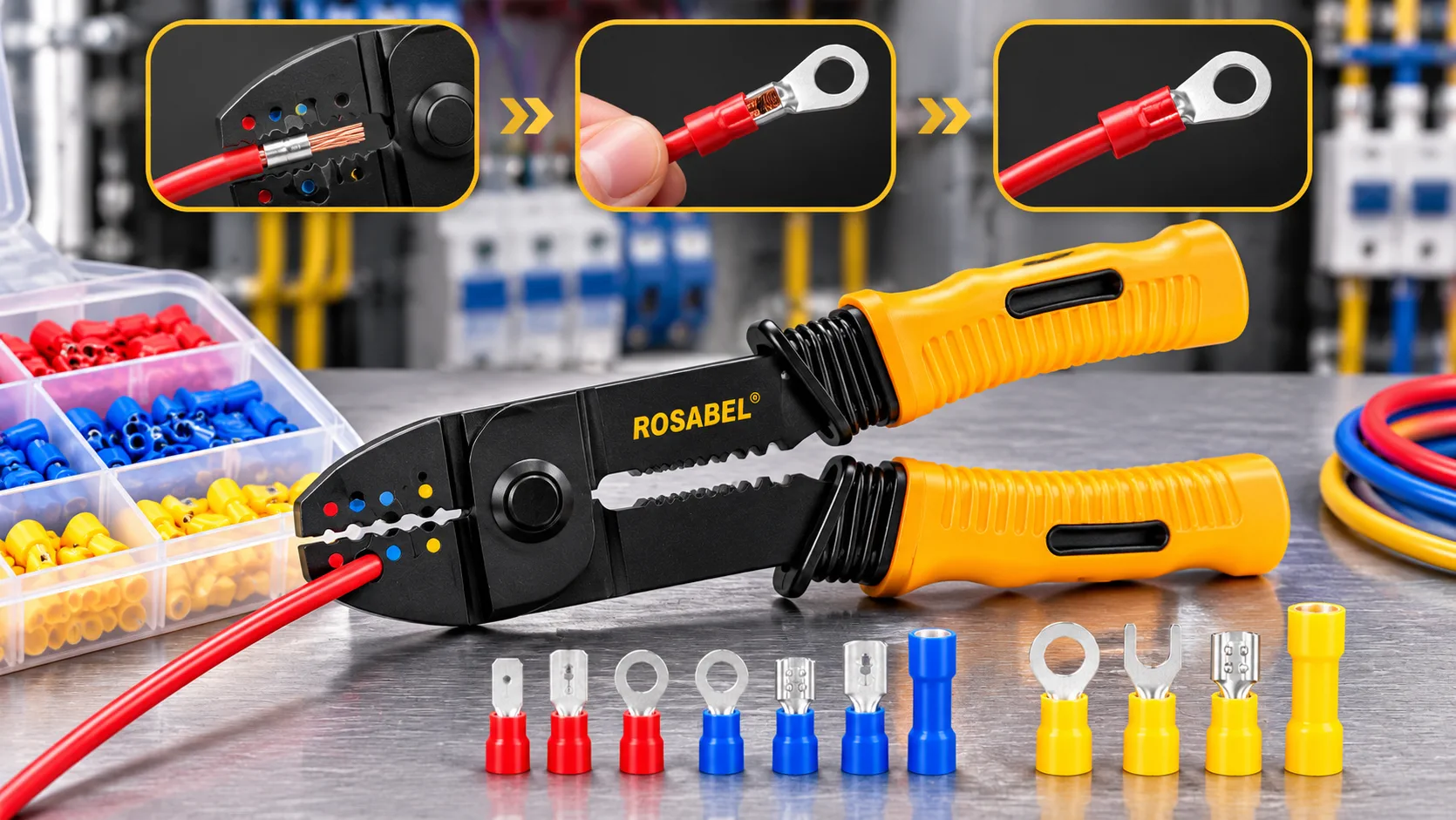
Crimping Tool Guide: Types, Terminal Colour Code and How to Crimp
A crimping tool joins a wire to a terminal or connector by pressing a metal sleeve tightly around the conductor. Done right, a crimp is fast, strong and does not need solder. Done wrong, it pulls loose or overheats. For distributors, the right crimpers depend on who you sell to: auto parts shops, electricians, network installers or DIY customers each need something different.
This guide explains the main types of crimping tools, the terminal colour code, how to make a good crimp and what to check on samples before you order.
What is a crimping tool?
A crimping tool is a hand tool that joins a wire to a terminal or connector by squeezing (crimping) the metal barrel of the terminal tightly around the bare wire. A good crimp makes a strong mechanical and electrical connection without solder. Electricians, car and marine wiring installers, network technicians and DIY users all use crimping tools.
- What it does: deforms the terminal barrel around the wire so it cannot pull out.
- What it is used for: ring, spade and butt terminals, cable lugs, network plugs and ferrules.
- Main types: plier-type crimpers, ratchet crimpers, and multi-tools that also strip and cut wire.
Types of crimping tools at a glance
| Type | What it crimps | Best for |
|---|---|---|
| Plier-type crimper (stripper/crimper) | Insulated and non-insulated terminals; also strips and cuts wire | Auto parts, DIY, general electrical; the volume seller |
| Ratchet crimper | Insulated terminals, with a ratchet that will not release until the crimp is complete | Professional electricians and panel builders |
| Open barrel / non-insulated crimper | Open barrel and uninsulated terminals and connectors | Automotive wiring harnesses and electronics |
| Ferrule crimper | Wire end ferrules for terminal blocks | Control panels and industrial wiring, especially in Europe |
| Modular (RJ45 / RJ11) crimper | Network and phone plugs | IT, network and security installers |
| Hydraulic / lug crimper | Large copper cable lugs | Power cables, solar and battery installations |
Terminal colour code: red, blue and yellow
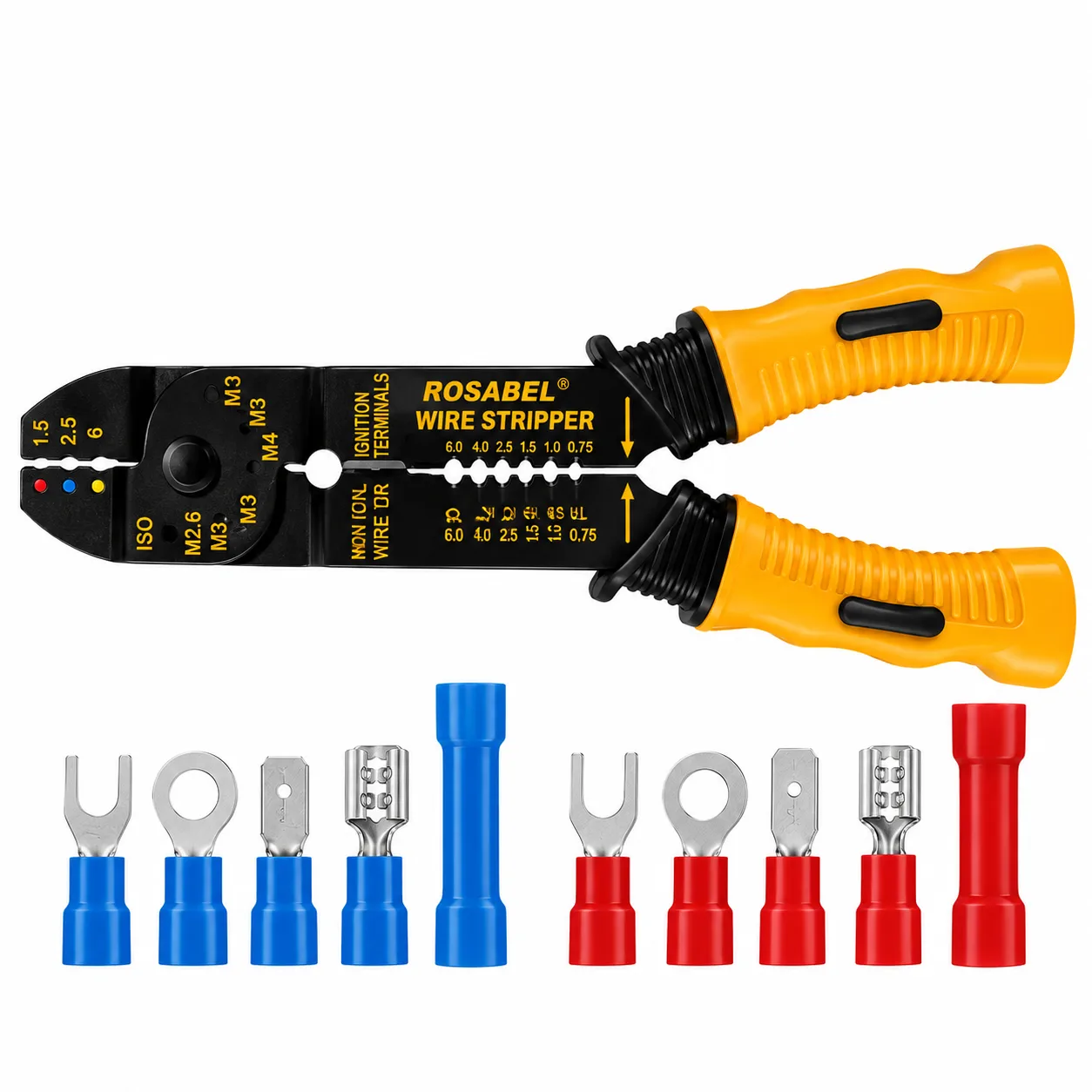
Insulated crimp terminals are colour-coded by the wire size they fit. A good crimping tool has matching colour or size marks on its jaws, so the user crimps each terminal in the right die.
| Terminal colour | Wire size (AWG) | Wire size (mm², approx.) |
|---|---|---|
| Red | 22–18 AWG | 0.5–1.5 mm² |
| Blue | 16–14 AWG | 1.5–2.5 mm² |
| Yellow | 12–10 AWG | 4–6 mm² |
Using a terminal that is too big for the wire is the most common cause of a weak crimp. Crimper and terminal kits with an assortment of red, blue and yellow terminals help customers get it right, and they sell well in auto parts and DIY stores.
How to make a good crimp
- Strip the wire (a wire stripper makes this quick and clean) to the length of the terminal barrel, usually 5 to 8 mm. Do not nick or cut strands.
- Twist stranded wire lightly and push it fully into the barrel, so the copper is visible at the front but the insulation reaches the barrel.
- Place the terminal in the jaw position that matches its colour or size.
- Squeeze firmly until the jaws close fully. On a ratchet crimper, the tool releases only when the crimp is complete.
- Pull test: hold the terminal and pull the wire firmly by hand. A good crimp does not move.
Plier-type or ratchet crimper?
Plier-type stripper/crimpers are inexpensive, do several jobs and suit occasional users, which is why they are the volume seller in most markets. Their weak point is that the crimp quality depends on how hard the user squeezes. Ratchet crimpers apply the same force every time and will not open until the crimp is complete, so professionals and panel builders prefer them. Many distributors stock both: one for retail, one for trade.
What to check on samples
- Crimp strength: crimp red, blue and yellow terminals and pull test each one.
- Jaw marks: the colour or size marks should be clear and match the terminals you sell.
- Stripping holes: on combination tools, the holes should strip insulation without cutting copper strands.
- Joint and spring: the pivot should have no side play, and the spring should open the tool smoothly.
- Terminals in kits: check that terminal barrels are evenly plated and the insulation sleeves fit the wire sizes on the label.
Our crimping and wire tools
We supply crimping tools and kits for wholesale, OEM and private label, with MOQ from 100 pcs per item for in-stock models:
- Wire Stripper and Crimper, 9″: stripping holes, terminal crimper, wire cutter and small bolt cutter in one tool.
- 181-Piece Wire Stripper and Terminal Set: stripper, crimper and assorted insulated terminals in a clear box.
- 3 in 1 Automatic Wire Stripper: self-adjusting stripper that also cuts and crimps.
For stripping tools and wire sizes, see our wire stripper guide.
FAQ about crimping tools
What is the best crimping tool for beginners?
A plier-type stripper/crimper with colour-marked jaws, ideally sold in a kit with red, blue and yellow terminals.
What do the red, blue and yellow terminals mean?
They show the wire size: red for about 0.5–1.5 mm² (22–18 AWG), blue for 1.5–2.5 mm² (16–14 AWG) and yellow for 4–6 mm² (12–10 AWG).
Is crimping better than soldering?
For most automotive and electrical connections, a correct crimp is faster and resists vibration well. Soldering is more common in electronics.
What is a crimping tool called in Spanish?
Pinza crimpeadora, crimpadora or pinza para terminales, depending on the country.
Can you make crimping kits with our brand?
Yes. We can put your logo on the tool and the case and choose the terminal mix for your market. Tell us your quantity and we will confirm the MOQ.
Talk to us about crimping tools
Tell us your market, the terminals your customers use and whether you want your own brand. We will recommend models, send samples in 5 to 7 days and quote within 24 hours.