Importing Camping Gear from China to the EU: Duties, GPSR and Landed Cost
Importing camping gear from China into the EU costs more than the factory price. Your landed cost is the product price plus freight and insurance, EU customs duty, import VAT and clearance fees, and since December 2024 every product also needs an EU responsible person under the General Product Safety Regulation (GPSR).
We are ROSABEL, a camping gear and hand tool manufacturer in Ningbo, China, shipping mainly to Europe and North America. This guide explains each cost and rule in plain language, with the duty rates for common camping products. It reflects the rules as of November 2026; always confirm the rate for your exact product code before you order.
What makes up your landed cost
For a container or pallet shipment from China to the EU, the landed cost per unit is built from these parts:
- Product price, usually quoted FOB Ningbo or EXW.
- Sea or rail freight and insurance to your EU port. Customs value in the EU is normally the CIF value, so freight and insurance are included when duty is calculated.
- Customs duty, a percentage of the customs value set by the product’s CN code.
- Import VAT at your country’s rate (for example 19% in Germany, 20% in France), charged on the customs value plus duty. VAT-registered businesses can normally reclaim it.
- Clearance, port and local delivery costs from your customs broker and forwarder.
EU import duty rates for common camping gear
Duty depends on the CN code, not on the product name. These are the standard third-country rates for some of our most common camping products:
| Product | Typical CN code | Standard EU duty |
|---|---|---|
| Folding camping chairs with metal frames | 9401 71 / 9401 79 | 0% |
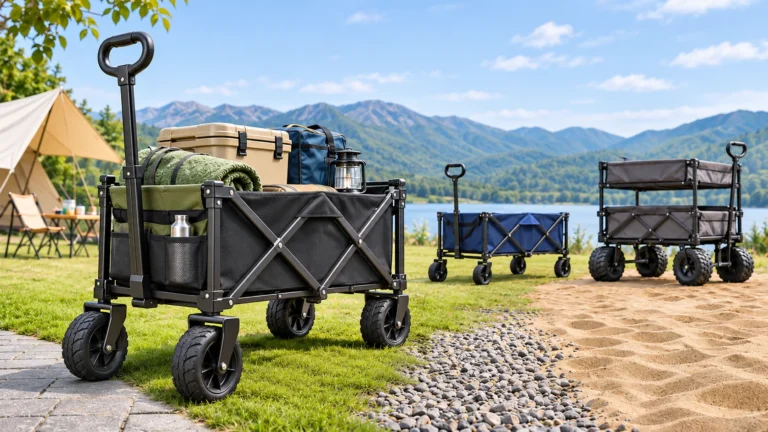
| Folding wagons and hand carts | 8716 80 00 | 1.7% |
| Tents of synthetic fibres | 6306 22 00 | 12% |
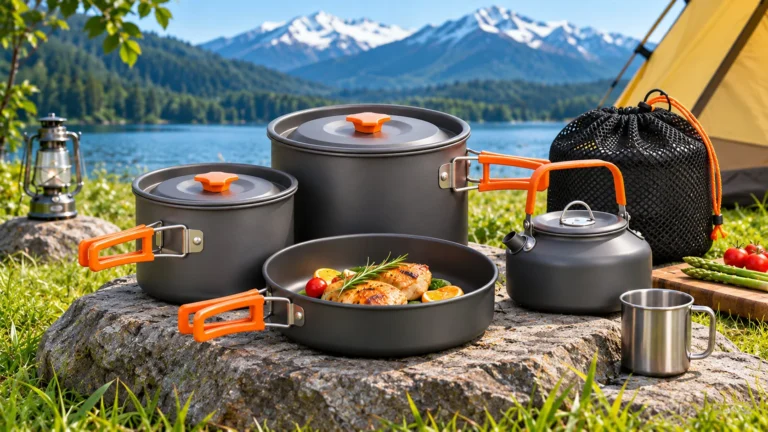
| Camping cookware of stainless steel or aluminium | 7323 93 / 7615 10 | Low single digits; check the exact code |
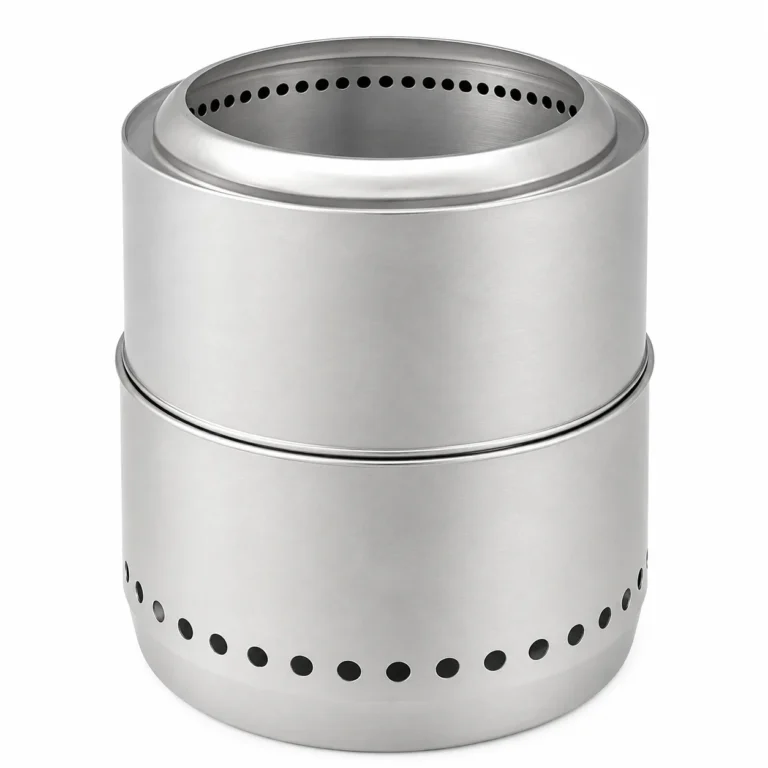
| Fire pits, grills and camp stoves | Depends on fuel and material | Check with your broker |
Some steel and aluminium products from China also carry EU anti-dumping duties. Before you place an order, check the full 10-digit code in the EU TARIC database or ask your customs broker, and send us the code so we describe the goods the same way on the invoice and packing list.
A worked example
Say a shipment of folding wagons has a CIF customs value of €10,000 and is imported into Germany. Duty at 1.7% is €170. Import VAT at 19% is charged on €10,170, which is €1,932.30. A VAT-registered importer reclaims the VAT, so the real extra cost is the €170 duty plus clearance fees. The same value of synthetic tents would pay €1,200 in duty at 12%, which is why the product code matters so much for your margin.
GPSR: what EU buyers of camping gear must have in place
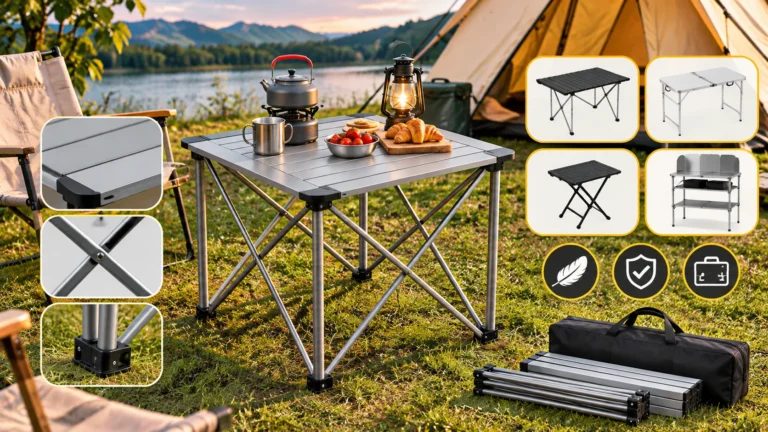
The General Product Safety Regulation, Regulation (EU) 2023/988, has applied since 13 December 2024 to non-food consumer products sold in the EU, including camping chairs, tables, cots, wagons and cookware. The main points for importers are:
- An EU responsible person. Products from outside the EU need an economic operator established in the EU, usually the importer or an authorised representative.
- Product identification. A model number, batch or serial number on the product or, where that is not possible, on the packaging.
- Manufacturer and responsible person details. Name, postal address and an electronic address, such as an email or website.
- Instructions and safety warnings in the language of the country where the product is sold.
- Online listings must show the same manufacturer, responsible person and product information.
As the manufacturer, we can print your responsible person details and our own details on labels, rating plates and cartons, mark model and batch numbers, and supply instructions and warnings in the languages you need. Tell us your requirements before mass production, because changing labels after packing costs time.
Does camping gear need CE marking?
Not always. CE marking only applies to products covered by specific EU product laws. Most camping chairs, tables, cots, wagons and cookware are not, so their safety falls under the GPSR instead. CE is needed for products such as battery or mains-powered camping lights (electrical and EMC rules, plus RoHS), and other rules apply to toys and personal protective equipment.
Two other rules often matter for camping gear. Cookware and anything that touches food must meet the EU food contact rules in Regulation (EC) 1935/2004, usually backed by a declaration of compliance and migration test reports. Rubber and plastic grips must meet REACH limits on restricted substances such as PAHs.
Product-dependent certifications such as CE, UKCA, GS and RoHS 2.0 can be arranged with us. Tell us the market and sales channel first, so we test what your buyers will actually ask for.
Packaging rules: PPWR and national registration
The EU Packaging and Packaging Waste Regulation, Regulation (EU) 2025/40, has applied since 12 August 2026. Its requirements are being phased in, with more recyclability and recycled-content rules from 2030. In practice, the importer who first places packaged goods on the market in a country usually also has to register with that country’s packaging scheme, such as LUCID in Germany, and pay for the packaging they bring in.
Lighter, simpler packaging lowers these fees. We can quote mono-material cartons, reduce plastic bags and inserts, and size master cartons to cut empty space.
The €3 duty on low-value parcels
From 1 July 2026, the EU charges a temporary €3 customs duty per item category on consignments worth €150 or less sent from outside the EU, under Council Regulation (EU) 2026/382. This mainly affects parcels shipped directly to consumers. Container, pallet and bulk wholesale shipments are cleared normally at the standard duty rates above.
DDP: letting the supplier handle import
If you prefer not to manage freight and clearance yourself, we can quote DDP to your warehouse in the EU. Under DDP the price includes freight, duty and clearance, and the forwarder handles customs on arrival. You still need to agree who acts as importer for VAT and GPSR purposes, so we confirm that with you before the first order.
For the full buying process, from supplier checks to shipping, read our guide to buying outdoor equipment from China.
Checklist before you order camping gear for the EU
- Confirm the CN code and duty for each product with your broker or in TARIC.
- Decide who is the importer of record and the GPSR responsible person.
- Agree label content: model and batch number, manufacturer and responsible person details, warnings and languages.
- List the tests your market needs, such as food contact for cookware or CE for camping lights.
- Plan packaging to keep packaging fees and empty space down.
- Choose your trade term: FOB, EXW or DDP.
If you are still choosing a factory, our camping gear manufacturer page shows what we make and how an order works.
Importing camping gear to the EU: FAQ
What import duty do I pay on camping chairs from China?
Folding camping chairs with metal frames, CN 9401 71 or 9401 79, have a standard EU duty of 0%. You still pay import VAT at your country’s rate, which VAT-registered businesses can normally reclaim.
What is the EU duty on folding wagons from China?
Folding wagons and hand carts are usually classified under CN 8716 80 00, with a standard EU duty of 1.7% of the customs value, plus import VAT.
Do folding wagons and camping chairs need CE marking?
Usually not. They are not covered by a specific CE directive, so their safety falls under the General Product Safety Regulation, which requires an EU responsible person, product identification, manufacturer details and safety information.
Who is the responsible person under GPSR?
An economic operator established in the EU, normally the importer, an authorised representative appointed by the manufacturer, or in some cases the fulfilment service provider. Their details must be on the product, packaging or accompanying document.
Does the new €3 EU duty apply to container shipments?
No. The €3 per-item duty applies to consignments worth €150 or less, mainly parcels sent directly to consumers. Wholesale container and pallet shipments pay the normal duty for each product code.
Can ROSABEL ship DDP to the EU?
Yes. We can quote DDP to your warehouse, with freight, duty and clearance included, and agree in advance who acts as importer for VAT and GPSR.
This guide is general information, not legal or customs advice. Duty rates and rules change, so confirm the details for your products with a customs broker before you import.