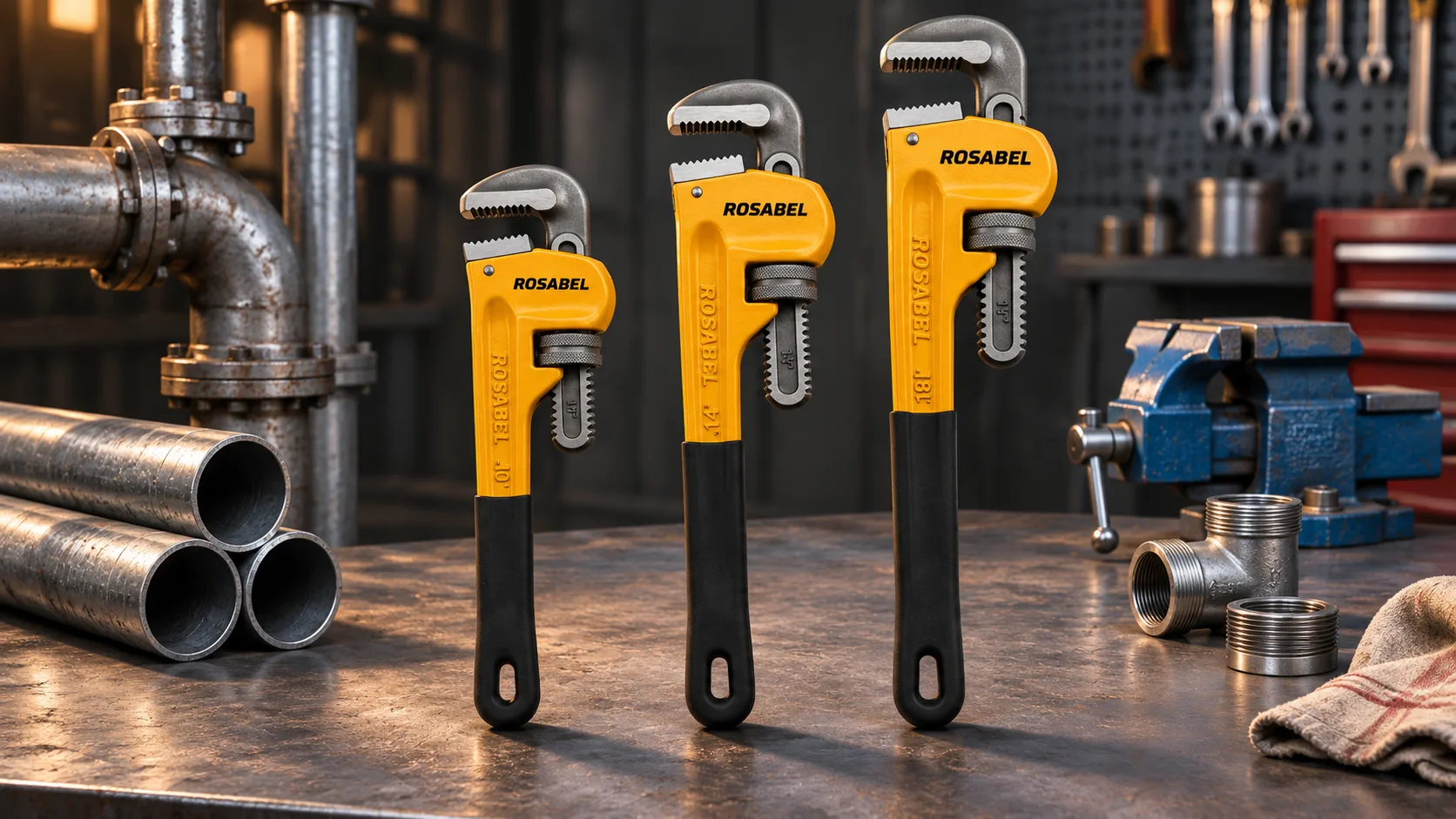
Pipe Wrench Guide: Types, Sizes and How to Use a Pipe Wrench
A pipe wrench is an adjustable wrench made to grip and turn round pipe. Its hook jaw floats slightly, so the harder you pull the handle, the tighter the teeth bite. That is why plumbers, heating engineers, pipeline crews and farm workers still rely on it for threaded steel pipe, and why it is one of the most searched hand tools in the world.
This guide explains the main types of pipe wrenches, sizes and materials, how to use one correctly and what to check on samples before you order. If you supply workshops as well as plumbers, our mechanic tool sets guide covers the tools that usually go alongside.
How a pipe wrench works
The upper hook jaw is adjusted with a knurled nut and sits loosely in the frame. When you pull the handle, the jaw tilts and both sets of teeth dig into the pipe. The grip gets stronger as force increases and releases when you push back, so the user can ratchet the pipe round without re-adjusting. Always turn the wrench in the direction the jaw opening faces.
Types of pipe wrenches
| Type | Key feature | Best for |
|---|---|---|
| Straight pipe wrench | Classic heavy-duty pattern with a straight handle | General plumbing, heating and maintenance; the volume seller |
| Aluminium-handle pipe wrench | Same jaws, lighter handle (roughly 40% lighter) | Installers who carry large sizes all day |
| End (offset) pipe wrench | Jaw set at an angle to the handle | Pipes close to walls or in tight spaces |
| Chain pipe wrench | A chain wraps around the pipe instead of a jaw | Large and irregular pipe, oil and gas work |
| Strap wrench | Rubber or nylon strap | Plastic, chrome or polished pipe that must not be marked |
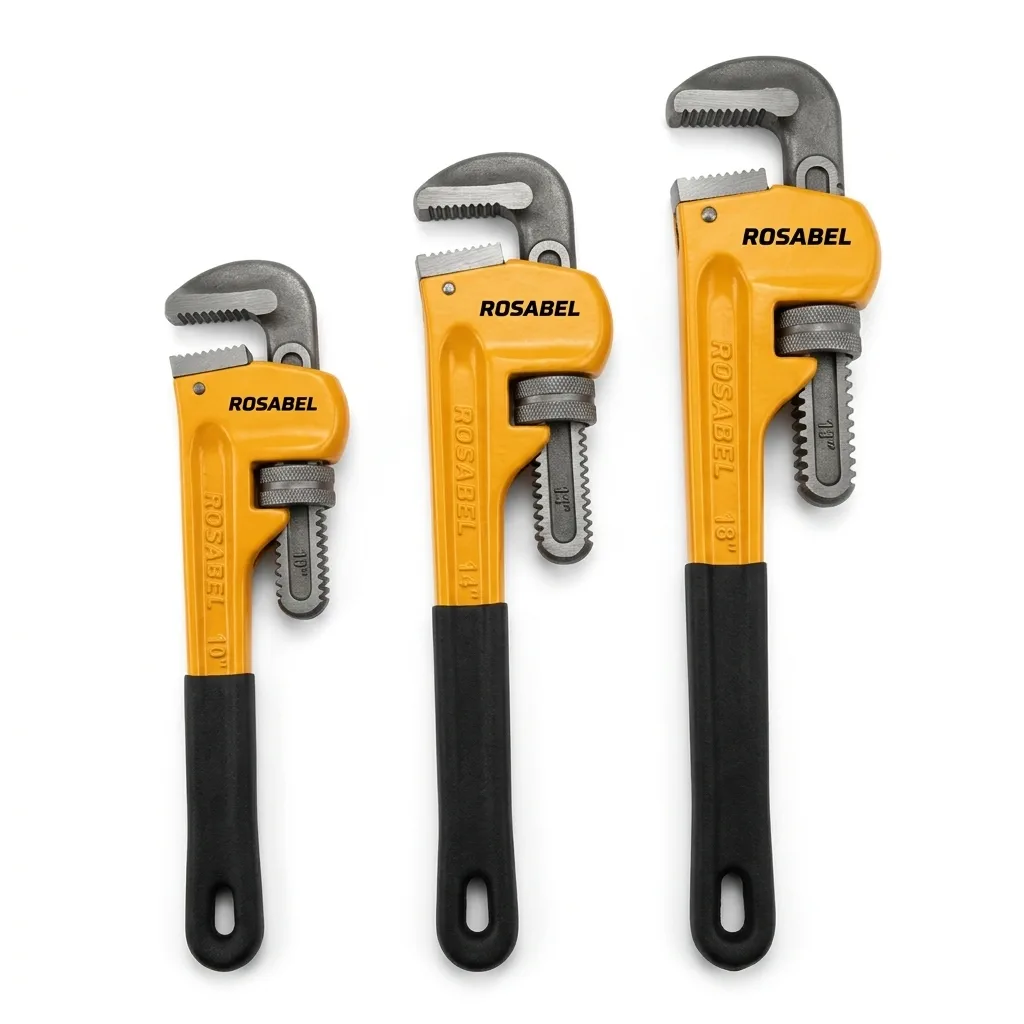
Sizes: from 8″ to 48″
Pipe wrenches are sold by overall length. The longer the handle, the more leverage and the larger the pipe it can grip. The pipe capacity below is typical and varies by design.
| Length | Typical pipe capacity | Common uses |
|---|---|---|
| 8″–10″ (200–250 mm) | up to about 1″–1-1/2″ (25–38 mm) | Household plumbing and small fittings |
| 14″ (350 mm) | up to about 2″ (50 mm) | The all-round plumber’s size |
| 18″ (450 mm) | up to about 2-1/2″ (63 mm) | Installers, heating and farm work |
| 24″ (600 mm) | up to about 3″ (76 mm) | Larger pipe and heavy maintenance |
| 36″–48″ (900–1200 mm) | up to about 5″–6″ (127–152 mm) | Pipeline, oil, water and irrigation crews |
Most distributors start with 10″, 14″ and 18″, then add 24″ and the large sizes for trade and industrial customers.
Materials and finish
- Jaws: forged, heat-treated steel with hardened teeth that grip without slipping.
- Handle: cast or ductile iron for strength and lower cost, or aluminium for lighter weight.
- Finish: powder coating or paint on the handle, often in red or blue, with a rust-protected adjusting nut.
Pipe wrench use: how to use a pipe wrench correctly
- Open the jaw slightly wider than the pipe, then turn the nut until the jaw just touches the pipe.
- Leave a small gap between the back of the hook jaw and the pipe, so the jaw can bite.
- Pull the handle towards the open side of the jaw. Push back to release and take a new grip.
- On fittings, use a second wrench in the opposite direction to hold the pipe and stop it twisting.
- Do not add an extension tube to the handle; choose a longer wrench instead.
Pipe wrench teeth leave marks, so they should not be used on chrome, brass or polished fittings. For those, use a strap wrench or smooth-jaw pliers. For smaller fittings, many users prefer water pump pliers.
What to check on samples
- Teeth: sharp, evenly cut and hardened; they should not flatten on steel pipe.
- Adjusting nut: turns smoothly over the full range and holds its setting.
- Hook jaw: moves freely in the frame, with no cracks or casting defects.
- Handle: straight, with an even coating and clear size marking.
- Load test: grip a steel pipe in a vice and pull hard; the wrench should not slip or bend.
Our pipe wrenches and pipe tools
We supply pipe wrenches for wholesale, OEM and private label, with MOQ from 100 pcs per item for in-stock models:
- Heavy Duty Pipe Wrenches, 8″ to 48″: toothed jaws that bite harder as force increases, in eight lengths from 200 mm to 1200 mm.
- Bench Yoke Pipe Vise: holds pipe securely for cutting and threading.
- 5-Piece Ratchet Pipe Die Stock Set: ratchet handle and dies from 3/8″ to 1-1/4″ for threading steel water and gas pipe.
- Pipe Cutter, 3–30 mm: for copper, aluminium and brass pipe.
- PVC Pipe Cutter, 3–42 mm: for plastic pipe such as PVC.
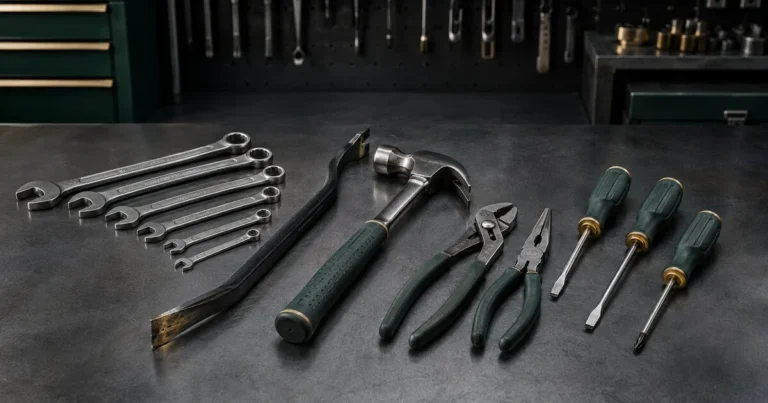
Plumbing wholesalers often combine these with pliers and spanners. See our wholesale pliers range guide.
FAQ about pipe wrenches
What is a pipe wrench used for?
A pipe wrench is used to grip and turn round metal pipe and fittings, mainly threaded steel and iron pipe in plumbing, heating, gas and farm work. Its serrated jaws bite harder as you pull the handle, so it holds round surfaces that a normal wrench would slip on. It is not meant for nuts and bolts, because the teeth mark the corners.
What size pipe wrench should I buy first?
A 14″ (350 mm) pipe wrench covers most plumbing work. Add a 10″ for small fittings and an 18″ for larger pipe.
What is the difference between a pipe wrench and an adjustable wrench?
A pipe wrench has toothed jaws that bite into round pipe. An adjustable wrench has smooth, parallel jaws for nuts and bolts and will not mark them.
Are aluminium pipe wrenches as strong as iron ones?
They use the same steel jaws, so the grip is similar. The aluminium handle is lighter, which matters most in sizes from 18″ up.
Can I use a pipe wrench on nuts and bolts?
It is not recommended. The teeth damage the corners of nuts. Use a spanner or an adjustable wrench instead.
Can you make pipe wrenches with our brand?
Yes. We can cast or mark your logo, choose the handle colour and design your label or packaging. Tell us your quantity and we will confirm the MOQ.
Talk to us about pipe wrenches
Tell us your market, the sizes you need and whether you want your own brand. We will recommend models, send samples in 5 to 7 days and quote within 24 hours.