How to Evaluate a Hand Tool Supplier: A Wholesale Buyer’s Checklist
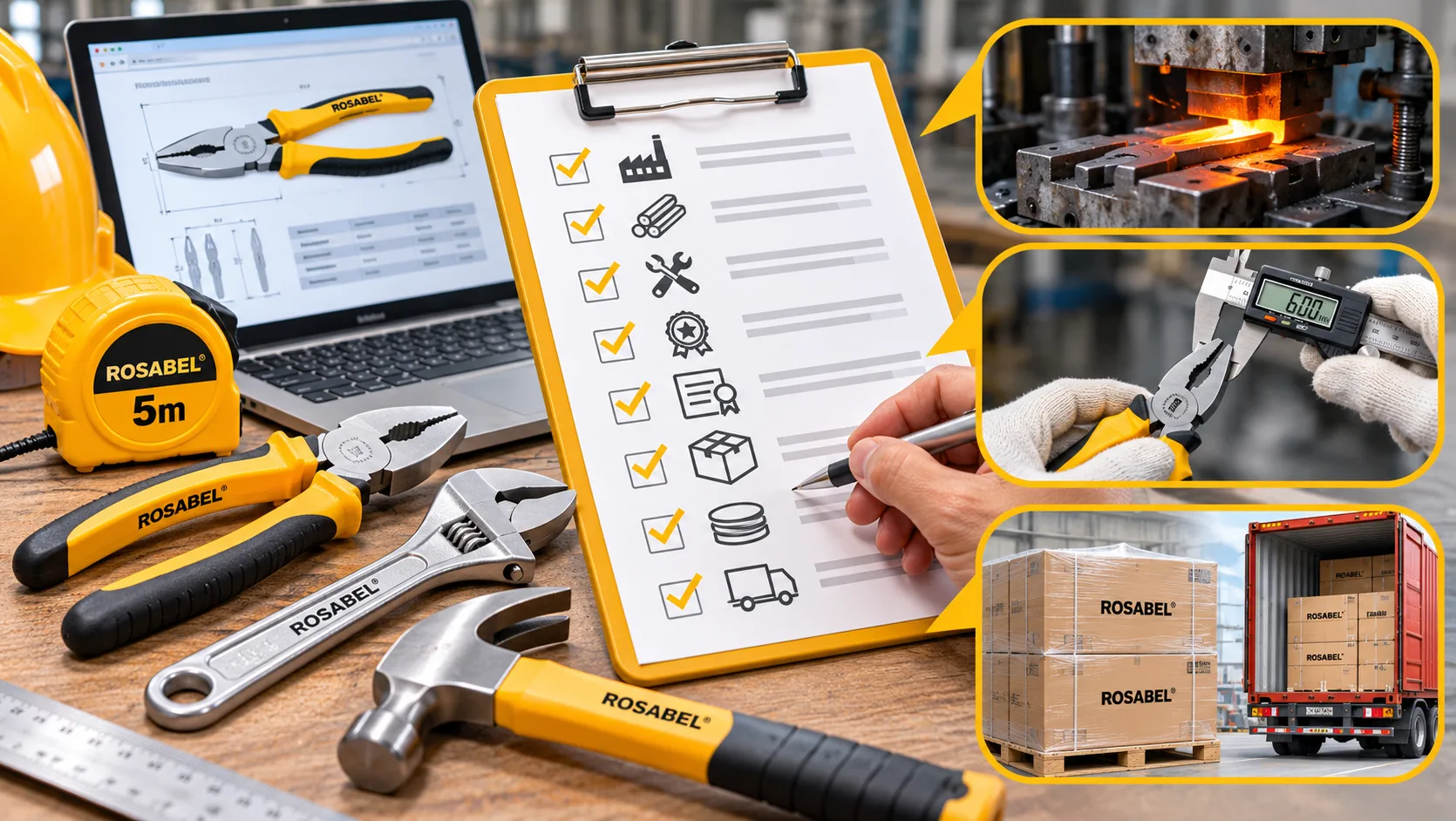
Choosing a hand tool supplier is about more than the unit price on a quotation. The real cost shows up later: a batch of pliers that will not cut cleanly, spanners that round off nuts, a container that ships three weeks late, or packaging that a retailer rejects. A short, structured evaluation before the first order prevents most of these problems.
This checklist walks through what experienced importers check when they evaluate a hand tool manufacturer or trading company in China, step by step.
1. Match the supplier to your product range
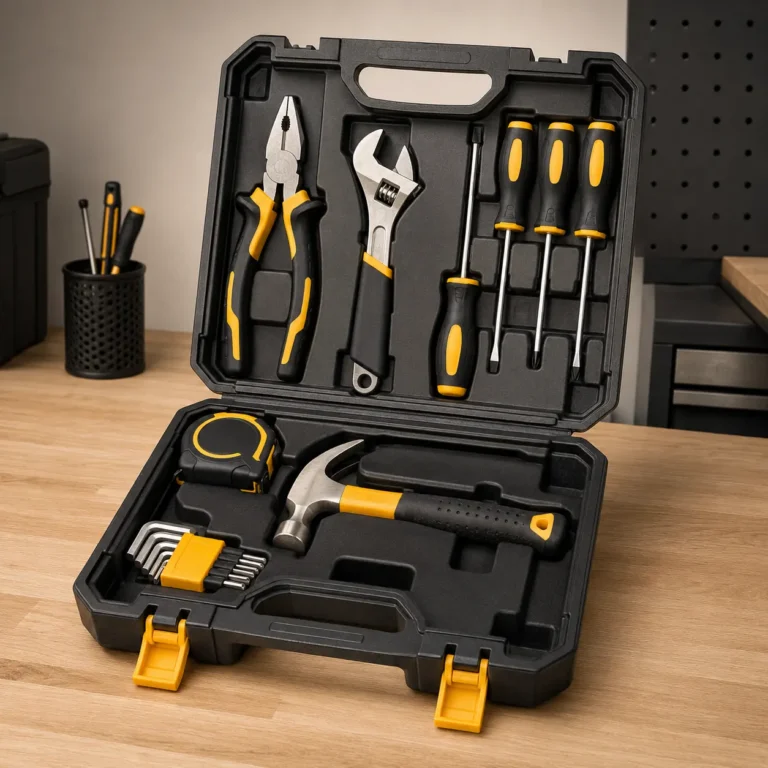
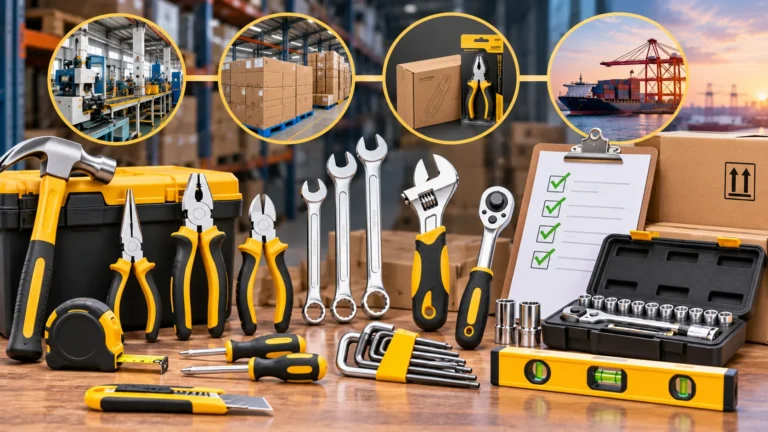
Start with what you actually need. A supplier that makes one product very well (for example only pliers) can be the right choice for a focused programme. If you buy across categories such as pliers, wrenches, hammers, measuring and garden tools, a manufacturer that also works with long-term partner factories can consolidate orders, inspection and shipping into one container, which saves time and freight.
- Which categories do they make themselves, and which come from partner factories?
- Can they show the same product in several quality levels (value, standard, professional)?
- Do they have experience shipping to your market?
2. Check materials and specifications in writing
Material names on a catalogue are not enough. Ask for the specification in writing and keep it with your order.
| Product | What to confirm |
|---|---|
| Pliers and cutters | Steel grade (e.g. CR-V or carbon steel), cutting edge hardness, joint type |
| Spanners and wrenches | Steel grade, size range, finish (satin or mirror chrome), standard (e.g. ISO 7738, ISO 6787) |
| Screwdrivers and bits | Bit steel (e.g. S2 or CR-V), tip hardness, handle material |
| Hammers | Head forging, head weight tolerance, handle material and fixing method |
| Measuring tapes | Blade width, markings, accuracy class if your market needs it |
3. Test samples like your customers will
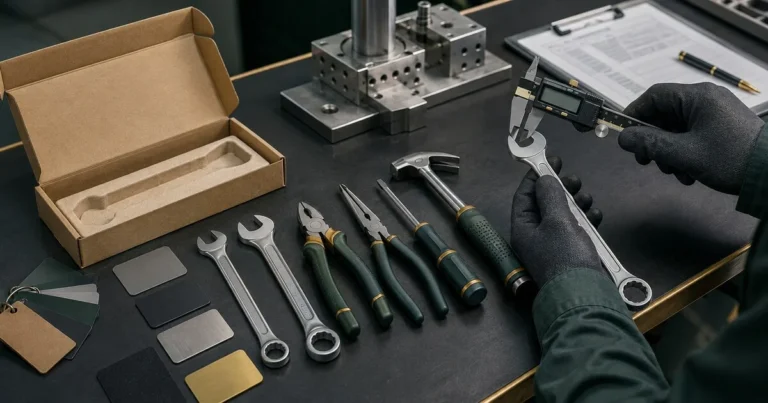
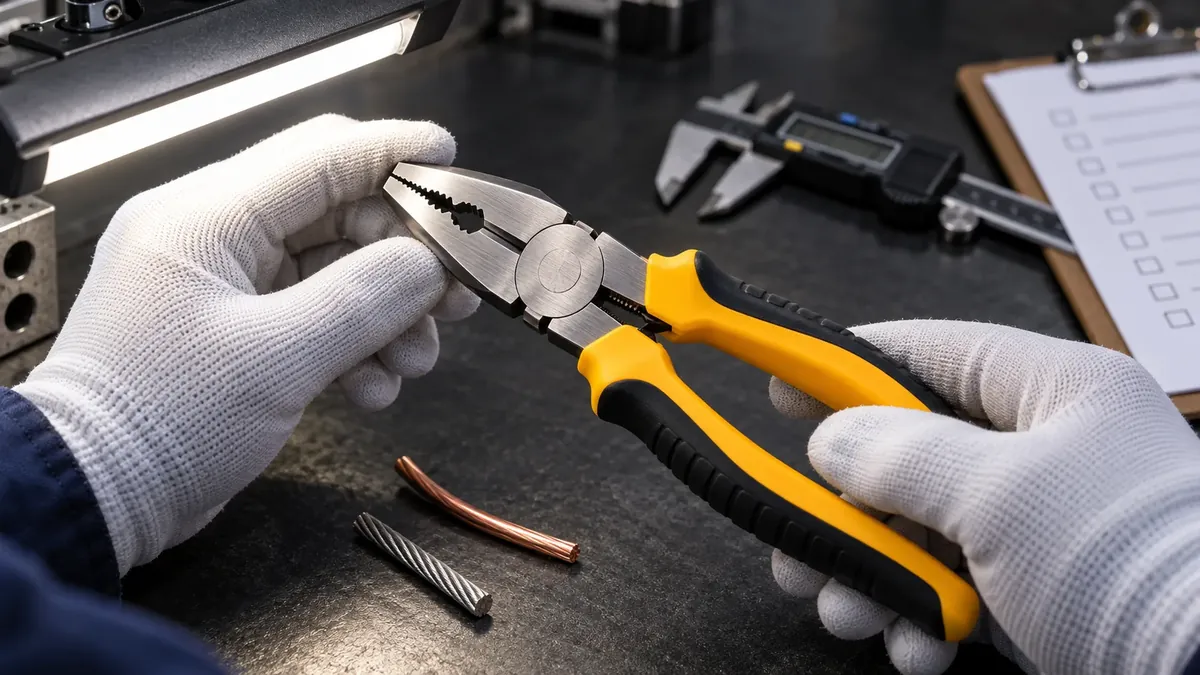
A sample should be tested, not just admired. Use it the way your end users will:
- Pliers: cut hard and soft wire up to the rated size; check that the jaws meet and the joint has no side play.
- Wrenches: fit them on real nuts and check that they grip the flats, not the corners.
- Screwdriver bits: drive screws with an impact driver and check the tips for wear.
- Hammers: strike repeatedly and check that the head does not loosen.
- Packaging: check barcodes, language, warnings and your logo artwork.
For product-specific checks, see our guides to combination and linesman pliers, hammers and tape measures.
4. Understand quality control at each stage
Ask the supplier to describe what they check and when, not only “we inspect every order”.
- Incoming materials: steel and components checked before production.
- During production: heat treatment, dimensions and finish checked on the line.
- Before shipment: a final inspection against your approved sample, with photos or a report.
- Third-party inspection: confirm the supplier welcomes your inspector before you pay the balance.
5. Confirm certificates and documents early
Depending on your market and product, you may need CE, GS, RoHS, REACH, UKCA, or test reports such as hardness or load tests. VDE / IEC 60900 insulated tools need specific certification. Tell the supplier your requirements before sampling, so the right documents are available when you need them, not after the goods have shipped.
6. Check OEM and private label capability
- Can they mark your logo on the tool (laser, stamping, printing) and on the handle?
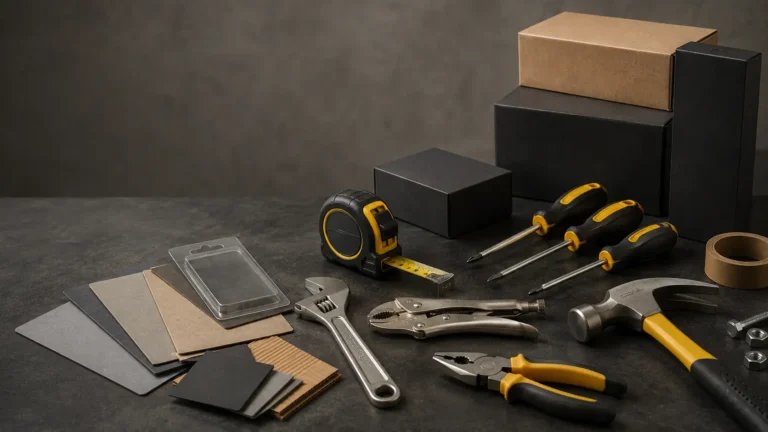
- Can they design and print your blister card, box or display packaging? (See our private label hand tools guide.)
- What is the MOQ for custom branding compared with in-stock items?
- Will they keep your artwork and specifications on file for repeat orders?
7. Compare total cost, not unit price
Two quotations with the same unit price can lead to very different landed costs. Compare:
- Packing quantities and carton sizes (how many fit in a container)
- Trade terms (EXW, FOB, DDP) and what is included
- Payment terms and sample cost
- Lead time and how delays are handled
- The cost of returns and complaints if quality is not consistent
8. Start with a controlled trial order
A first order of a few best-selling items, at the supplier’s standard MOQ, tests the whole process: communication, production, inspection, documents and shipping. Once the trial goes well, add more items and move to custom packaging.
Questions to ask a hand tool supplier
- Which products do you make in your own workshops, and which come from partner factories?
- Can you send the material specification for this item in writing?
- What do you check before shipment, and can we see a sample inspection report?
- Which certificates and test reports can you provide for our market?
- What is the MOQ for in-stock items and for our own branding?
- What is your usual lead time after deposit, and how do you inform us of delays?
- Can our inspector check the goods before we pay the balance?
How we work
ROSABEL (Ningbo Yinzhou Rosabel Industry Co., Ltd.) is an integrated manufacturer and trading company in Ningbo with more than 12 years of experience. We make many hand tools in our own workshops and work with long-term partner factories for wider ranges, so you can combine pliers, wrenches, hammers, measuring and garden tools in one order with one team handling development, inspection and shipping. MOQ starts at 100 pcs per item for in-stock products, and samples are usually ready in 5 to 7 days. See our company facts for details.
FAQ about choosing a hand tool supplier
Should I buy from a manufacturer or a trading company?
Both can work. A manufacturer gives direct control over one product type; an integrated manufacturer and trading company can combine several categories in one order. What matters most is clear specifications, real quality control and good communication.
How many suppliers should I compare?
Most importers compare three to five, test samples from two or three, and start with a trial order from one.
What is the most common mistake?
Choosing on unit price alone, without written specifications and a final inspection against the approved sample.
Can you help us plan a range for our market?
Yes. Tell us your market, customers and price level, and we will suggest a starting range of best-selling items.
Talk to us about your hand tool range
Send us your product list or target market, and we will recommend models, send samples in 5 to 7 days and quote within 24 hours.