Types of Hammers: Sledge, Club, Claw, Ball Pein and Mallets Explained
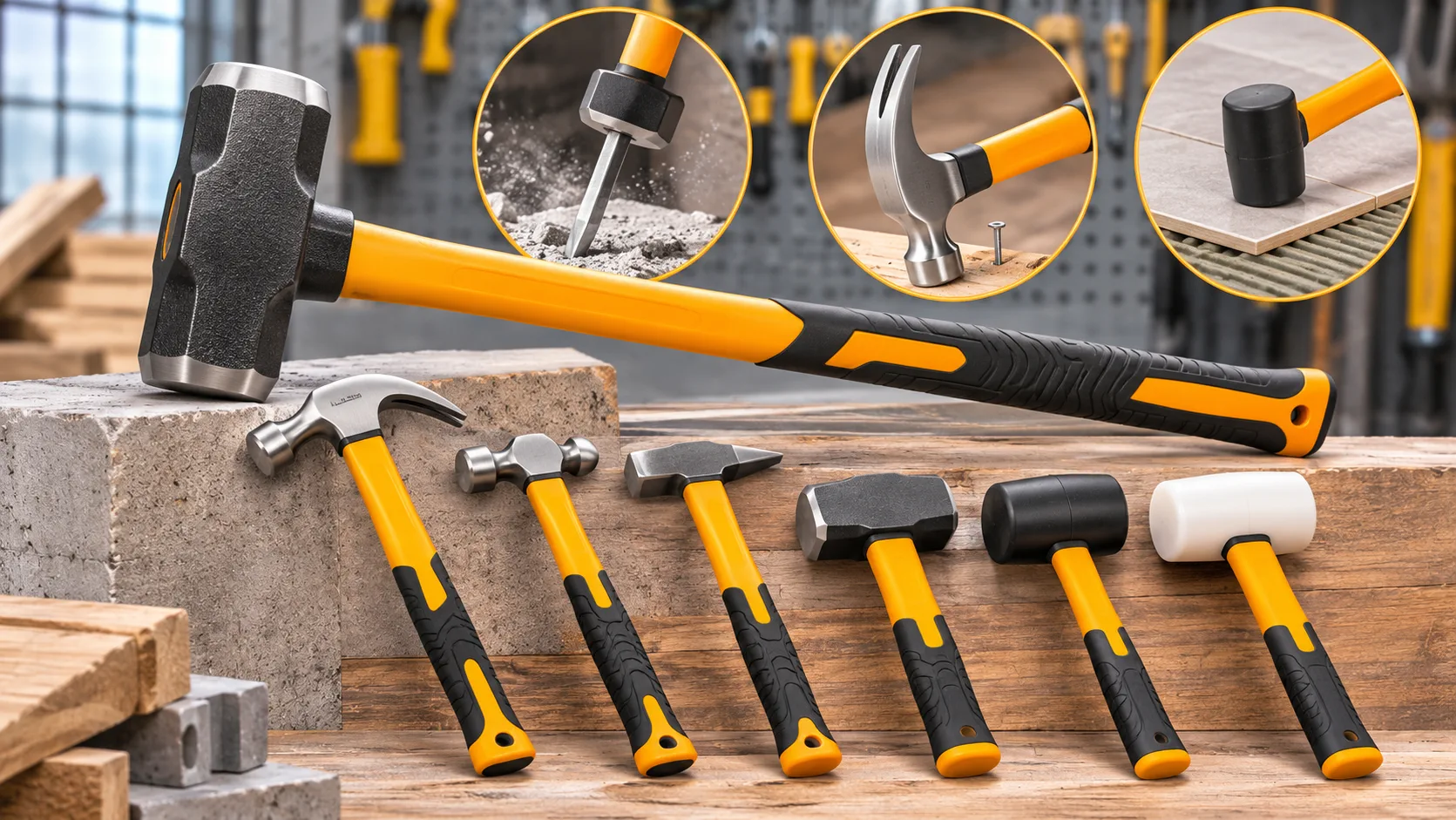
The main types of hammers are sledge hammers, club hammers, claw hammers, ball pein and cross pein hammers, and rubber or dead blow mallets. Each one is built for a different job, from demolition and chiselling to nailing, metalwork and assembly.
Every hardware store sells hammers, but a good hammer range is more than a few claw hammers on a hook. Builders need a sledge hammer for demolition, masons need a club hammer for chiselling, mechanics need a ball pein, and tilers need a mallet that does not mark the surface. Matching the hammer type and weight to the job is what turns a shelf of hammers into steady sales.
This guide explains the main types of hammers, their typical weights in ounces, pounds and kilograms, and what to check before you order.
Types and kinds of hammers at a glance
| Hammer | Typical weights | Main uses |
|---|---|---|
| Claw hammer | 12–24 oz (340–680 g) | Driving and pulling nails, carpentry, DIY |
| Sledge hammer | 3–20 lb (1.4–9 kg) | Demolition, breaking concrete, driving stakes |
| Club hammer (lump or stoning hammer) | 2–4 lb (1–2 kg) | Striking chisels, light demolition, masonry |
| Ball pein hammer | 8–32 oz (225–900 g) | Metalwork, shaping rivets, striking punches |
| Cross pein (machinist) hammer | 300–1,000 g | Starting nails, metalwork, general workshop use |
| Rubber mallet | 16–32 oz | Tiling, paving, furniture assembly without marking |
| Dead blow mallet | 1–3 lb | Automotive and assembly work with no rebound |
Sledge hammers
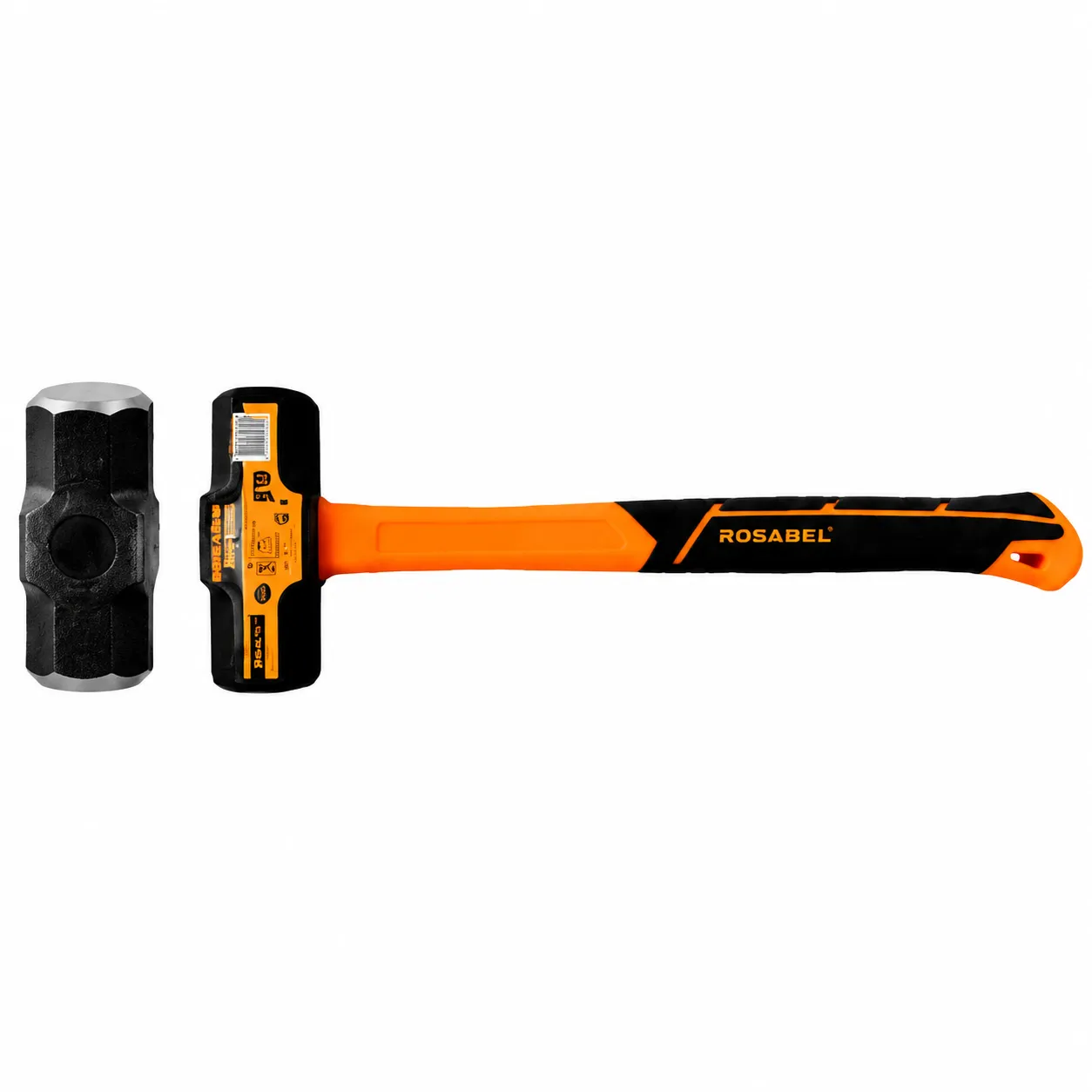
A sledge hammer has a heavy, usually octagonal or square steel head on a long handle, swung with two hands. The weight does the work, so the user chooses by job: 6 to 8 lb for general demolition and stakes, 10 lb and above for breaking concrete and heavy work. In Mexico the same tool is called marro; in Chile, combo.
The key quality points are the head-to-handle joint and the handle material. Fiberglass handles absorb vibration and are less likely to break than wood if the user misses the target.
Club hammers (lump or stoning hammers)
A club hammer is a short-handled, double-faced hammer of about 1 to 2 kg, used with one hand. Masons use it to drive chisels and bolsters, break blocks and set paving. Because both faces can be used, the wear spreads across the head. In Latin America it is often called maceta or comba.
Claw hammers
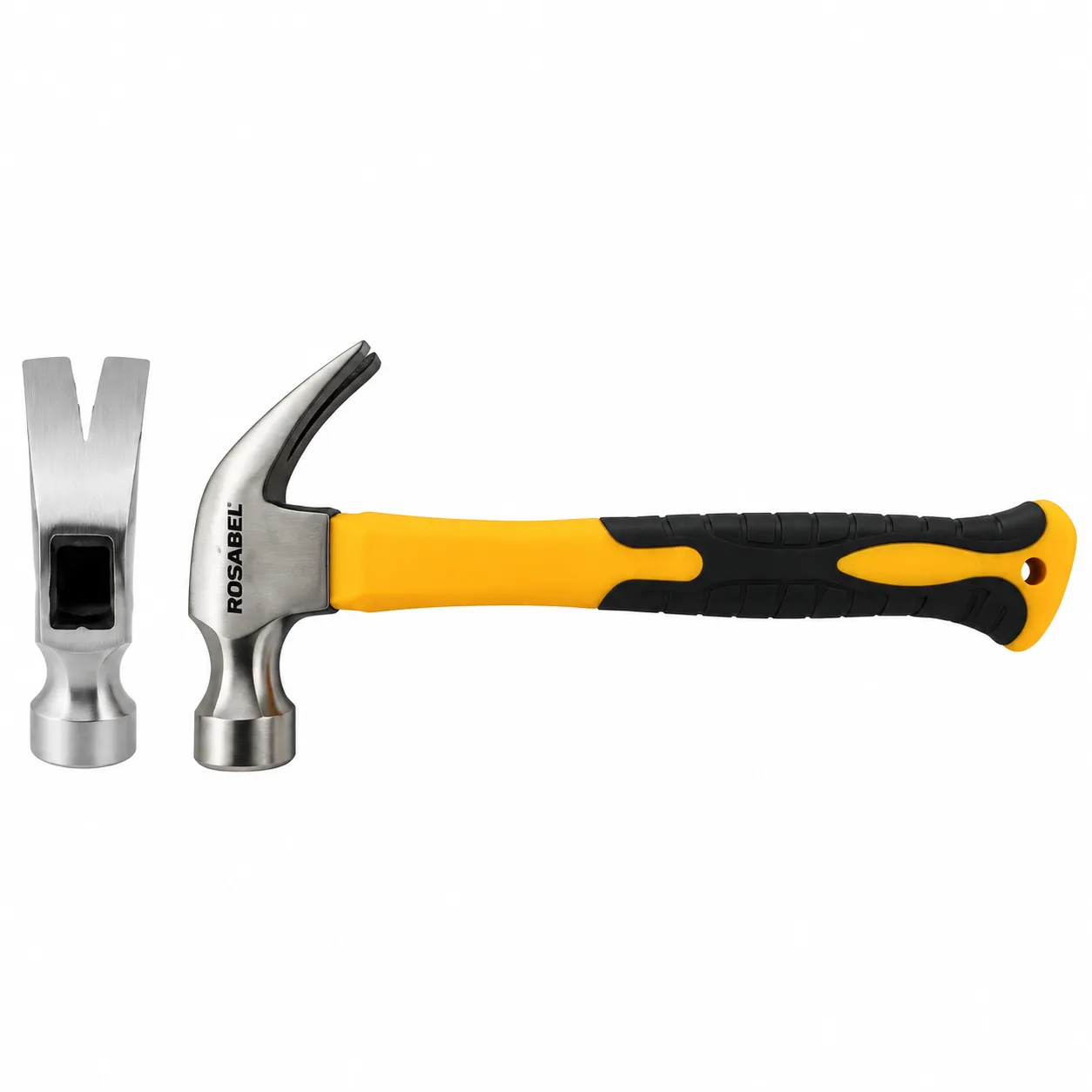
The claw hammer is the most-bought striking tool. A curved claw rocks back easily to pull nails; a straight (rip) claw is better for prying boards and formwork apart. The 16 oz size is the all-round best seller, 12 oz suits light DIY and 20 to 24 oz is for framing.
Ball pein and cross pein hammers
A ball pein hammer has a flat face for striking and a rounded pein for shaping metal and setting rivets. It is the standard hammer for mechanics and metalworkers. A cross pein (machinist) hammer has a wedge-shaped pein that helps start small nails held between the fingers.
Rubber and dead blow mallets
Mallets deliver force without marking the surface. Rubber mallets are used for tiles, paving and furniture assembly. Dead blow mallets have a shot-filled head that reduces rebound, so the blow stays where it lands, which mechanics and assembly workers appreciate.
How to choose the right hammer weight
| Weight | oz / lb | kg (approx.) |
|---|---|---|
| Light claw hammer | 12 oz | 0.34 |
| All-round claw hammer | 16 oz | 0.45 |
| Framing hammer | 20–24 oz | 0.57–0.68 |
| Club hammer | 2.5–4 lb | 1.1–1.8 |
| Medium sledge hammer | 6–8 lb | 2.7–3.6 |
| Heavy sledge hammer | 10–14 lb | 4.5–6.4 |
North American buyers usually order by ounces and pounds; buyers in Europe and Latin America often prefer grams and kilograms. We can mark either on the handle and label.
Safety and what to check on samples
- Head fixing: after a series of hard blows, the head must not move or loosen on the handle.
- Striking face: faces should be hardened and slightly bevelled at the edge to reduce chipping.
- Handle: fiberglass handles should have a firmly bonded grip with no cracks at the neck.
- Weight marking: the head weight should match the label within a small tolerance.
- Safety: remind users to wear eye protection and to replace hammers with mushroomed or chipped faces.
Our hammers and mallets
We supply a full striking range for wholesale, OEM and private label:
- Sledge Hammers with Orange Handle and Sledge Hammers: forged octagonal heads, fiberglass handles, 3 to 10 lb.
- Stoning (Club) Hammers with Fiberglass Handle: double-faced heads for masons.
- Soft Handle Claw Hammers (12 to 24 oz) and American Type Claw Hammers with straight rip claw.
- Ball Pein Hammers and Machinist Hammers for metalwork.
- Rubber Mallet, 16 oz and Dead Blow Mallets.
See all our striking and demolition tools.
FAQ about hammers
What is the difference between a sledge hammer and a club hammer?
A sledge hammer is heavy (usually 6 lb and up) with a long handle and is swung with two hands. A club hammer is lighter (about 1 to 2 kg) with a short handle and is used with one hand to strike chisels.
What size sledge hammer should I buy?
For general demolition and driving stakes, 6 to 8 lb suits most users. For breaking concrete and heavy work, 10 lb or more.
Which claw hammer weight is best?
16 oz is the best all-round weight. 12 oz is easier for light DIY; 20 to 24 oz is for framing.
What is a sledge hammer called in Spanish?
In Mexico it is usually called marro; in Chile, combo. Comba and maceta are also used in Latin America for heavy masonry hammers.
Talk to us about hammers
Tell us your market, the types and weights you need and whether you want your own brand. We will send samples in 5 to 7 days and quote within 24 hours.