Water Pump Pliers Guide: Tongue and Groove Pliers Types, Sizes and Uses
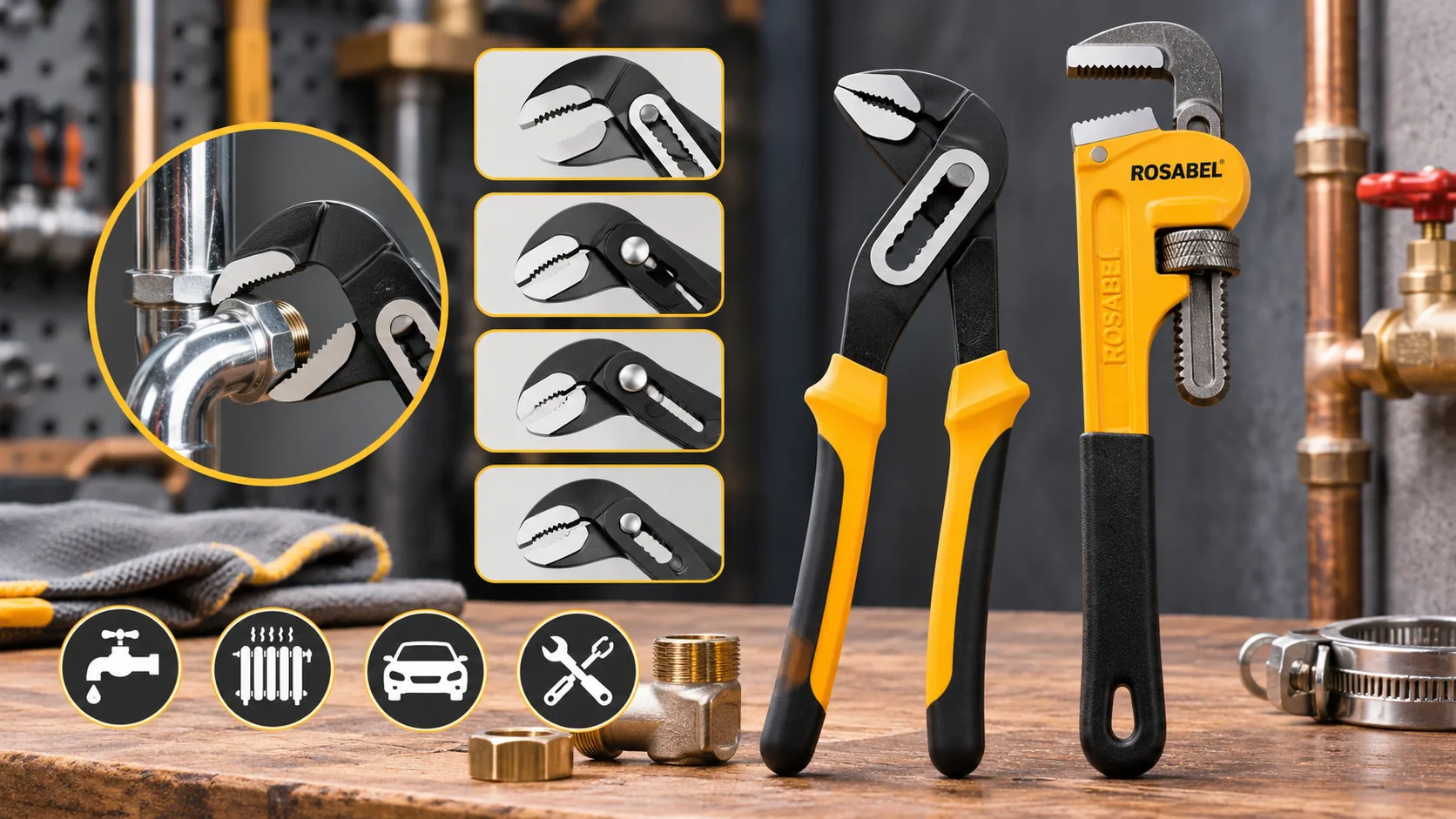
Water pump pliers are adjustable pliers with long handles and angled jaws that open wide enough to grip pipes, fittings and large nuts. They go by several names: tongue and groove pliers in North America, groove joint pliers, slip-joint pipe pliers or simply adjustable pliers. In Spanish-speaking markets they are often called alicates de pico de loro. Whatever the name, they are one of the best-selling pliers in plumbing, heating, automotive and hardware stores.
This guide explains the main joint types, sizes and jaw shapes, what water pump pliers are used for and what to check on samples before you order. If you are comparing general-purpose pliers too, read our guide to combination pliers vs linesman pliers.
How water pump pliers work
The lower handle has a row of grooves or holes. Moving the upper jaw along them changes the jaw opening, so one tool can grip a small fitting or a large nut. The jaws are set at an angle to the handles, which lets the user reach pipes in tight spaces and pull with a comfortable wrist position. When you pull the handles in the direction the jaws point, the grip tightens instead of slipping.
Types of water pump pliers
| Joint type | How it adjusts | Best for |
|---|---|---|
| Groove joint (tongue and groove) | A tongue on the upper jaw sits in one of several grooves | General plumbing and hardware; the volume seller |
| Box joint | The upper jaw passes through the lower jaw, so it is guided on both sides | Professional plumbers and installers; more stable, less side play |
| Push-button (quick adjust) | Press a button and slide the jaw to the size you need | Trade users who change sizes often |
| Slip joint (two positions) | Two positions only | Light household use; not true water pump pliers |
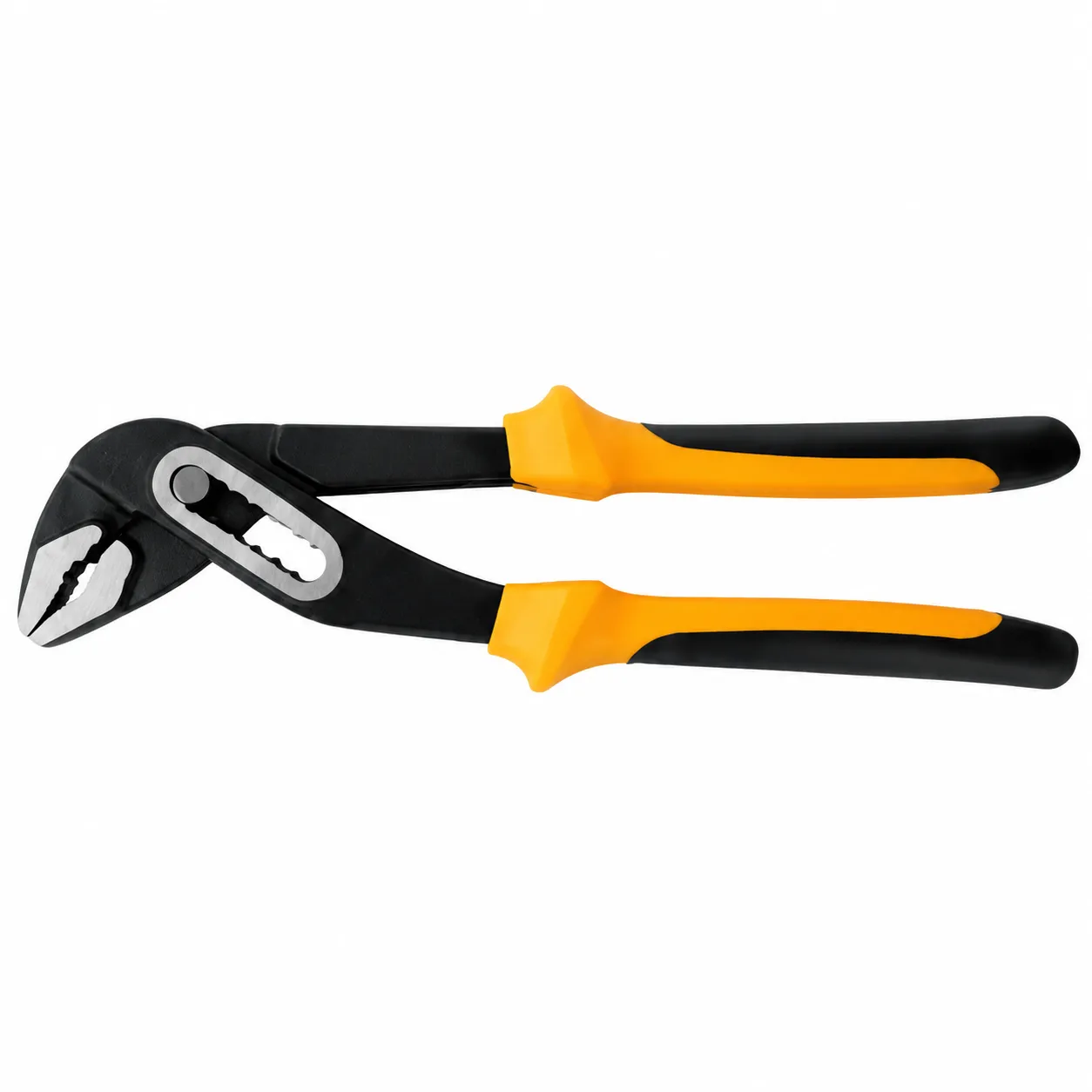
The box joint is the professional design. Because the jaw is guided on both sides, it does not twist or slip under load. Groove joint pliers cost less and cover most retail demand, so many distributors stock both.
Sizes: which lengths to stock
Water pump pliers are sold by overall length. The jaw capacity below is typical and varies by design, so always check the specification of the model you buy.
| Length | Typical jaw opening | Common uses |
|---|---|---|
| 7″ (180 mm) | about 25–30 mm | Small fittings, tap connections, electronics enclosures |
| 10″ (250 mm) | about 40–50 mm | The all-round size for plumbing, heating and automotive work |
| 12″ (300 mm) | about 50–60 mm | Larger pipes, waste traps and drain fittings |
| 16″ (400 mm) | about 70–90 mm | Large pipes and heavy installation work |
If you are starting a range, the 10″ is the best seller in almost every market. Add the 7″ and 12″ next, and a 3-piece set (7″, 10″, 12″) for retail promotions.
Jaw shapes and materials
- Toothed V-jaws grip round pipe, hex nuts and square parts. This is the standard pattern.
- Straight jaws have more flat contact on hex nuts and fittings.
- Smooth or protected jaws are for chrome and plated fittings that must not be scratched.
- Steel: chrome vanadium (CR-V) or high-carbon steel, with induction-hardened teeth so they stay sharp.
- Handles: dipped handles for budget lines, bi-colour soft grips for retail and trade lines.
Water pump pliers are covered by ISO 8976, which sets out dimensions and test requirements. Ask your supplier which standard they test to.
What water pump pliers are used for
- Plumbing: pipes, fittings, valves and trap nuts
- Heating and HVAC installation
- Automotive work, such as hose clamps, filters and fittings
- Farm, maintenance and general repair work
What to check on samples
- Joint: the jaw should move smoothly between positions and stay in place under load, with no side play.
- Teeth: check that the teeth are sharp, evenly cut and hardened; they should not flatten when gripping a steel pipe.
- Jaw alignment: close the tool and check that the jaws meet evenly.
- Handles: grips should not twist or slide off; check the length and colours against your brief.
- Marking and packing: check the logo, size marking, blister card or box and carton quantity.
Our water pump pliers
We supply water pump pliers for wholesale, OEM and private label, with MOQ from 100 pcs per item for in-stock models:
- Box Joint Water Pump Pliers, 10″: box joint, multi-position adjustment, toothed jaws and bi-colour soft-grip handles on a hanging blister card.
- Groove Joint Pliers, 8″, 10″ and 12″: multi-position groove joint in three lengths for a full range.
For other pliers, see our wholesale pliers range guide.
FAQ about water pump pliers
Are water pump pliers and tongue and groove pliers the same?
Yes. They are two names for the same tool. Groove joint pliers and slip-joint pipe pliers are other common names.
Why are they called water pump pliers?
They were first used to tighten the packing nuts on early car water pumps. The name stayed, even though they are now used mostly for plumbing.
What is the difference between water pump pliers and a pipe wrench?
Water pump pliers are lighter and quicker to adjust, for fittings and small pipes. A pipe wrench grips harder and is used for larger, tightly fixed threaded pipe.
Which size should I stock first?
The 10″ (250 mm). It covers most plumbing and automotive jobs and sells in almost every market.
Can you make water pump pliers with our brand?
Yes. We can mark your logo on the tool, choose handle colours and design your blister card or box. Tell us your quantity and we will confirm the MOQ.
Talk to us about water pump pliers
Tell us your market, the sizes you need and whether you want your own brand. We will recommend models, send samples in 5 to 7 days and quote within 24 hours.