Combination and Ring Spanners for Wholesale: Types, Sizes and Sample Checks
Spanners are one of the first tools a distributor is asked for and one of the easiest to get wrong, because small differences in steel, sizing and finish decide whether they grip a nut or round it off. This guide covers the main spanner types, the sizes to stock, and what to check on samples before a wholesale order. In North America the same tools are called wrenches.
1. The main spanner types
| Type | Ends | Typical use |
|---|---|---|
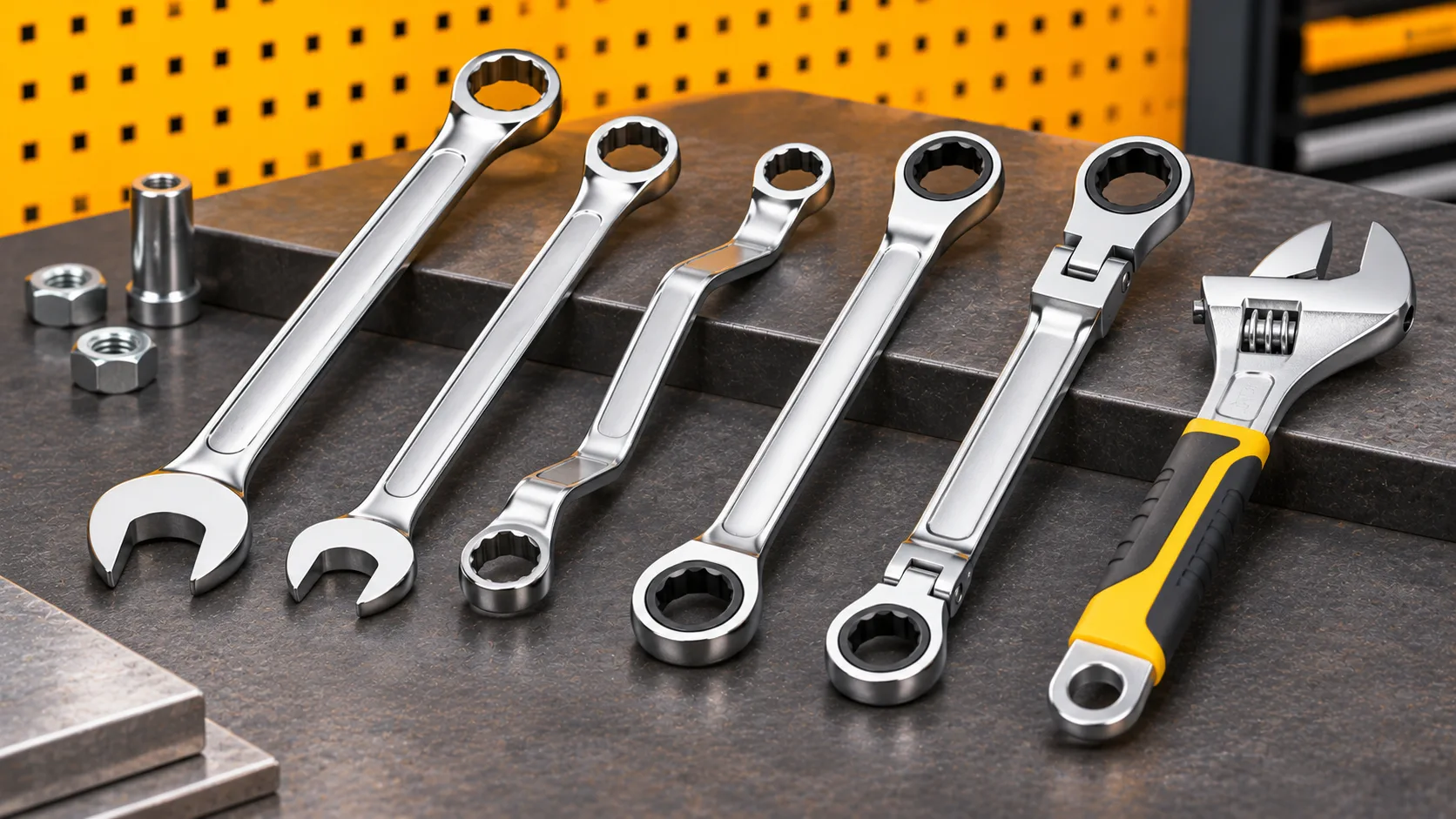
| Combination spanner | Open end and ring end of the same size | General workshop and automotive work; the standard choice for sets |
| Double ring spanner | Ring at both ends, two sizes, usually offset | Tight access and higher torque, where an open end could slip |
| Double open-end spanner | Open at both ends, two sizes | Quick work on easy-to-reach fasteners |
| Ratcheting combination spanner | Open end plus a ratcheting ring end | Faster work in tight spaces without lifting the tool |
| Flex-head ratcheting spanner | Ratcheting ring on a pivoting head | Awkward angles around engines and machinery |
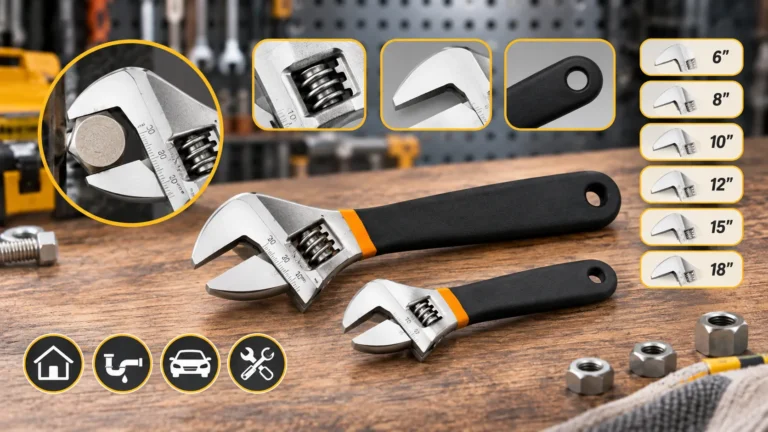
| Adjustable wrench | One adjustable jaw | Maintenance kits and odd sizes |
For most distributors, combination spanners are the core line, with ring spanners and ratcheting sets as the step-up options. Our range includes combination spanners, double ring spanner sets, ratcheting combination wrench sets and adjustable wrenches.
2. Metric or inch sizes
Most markets work in metric sizes. The United States still uses inch (SAE) sizes for a lot of work, so check what your customers actually ask for before you order.
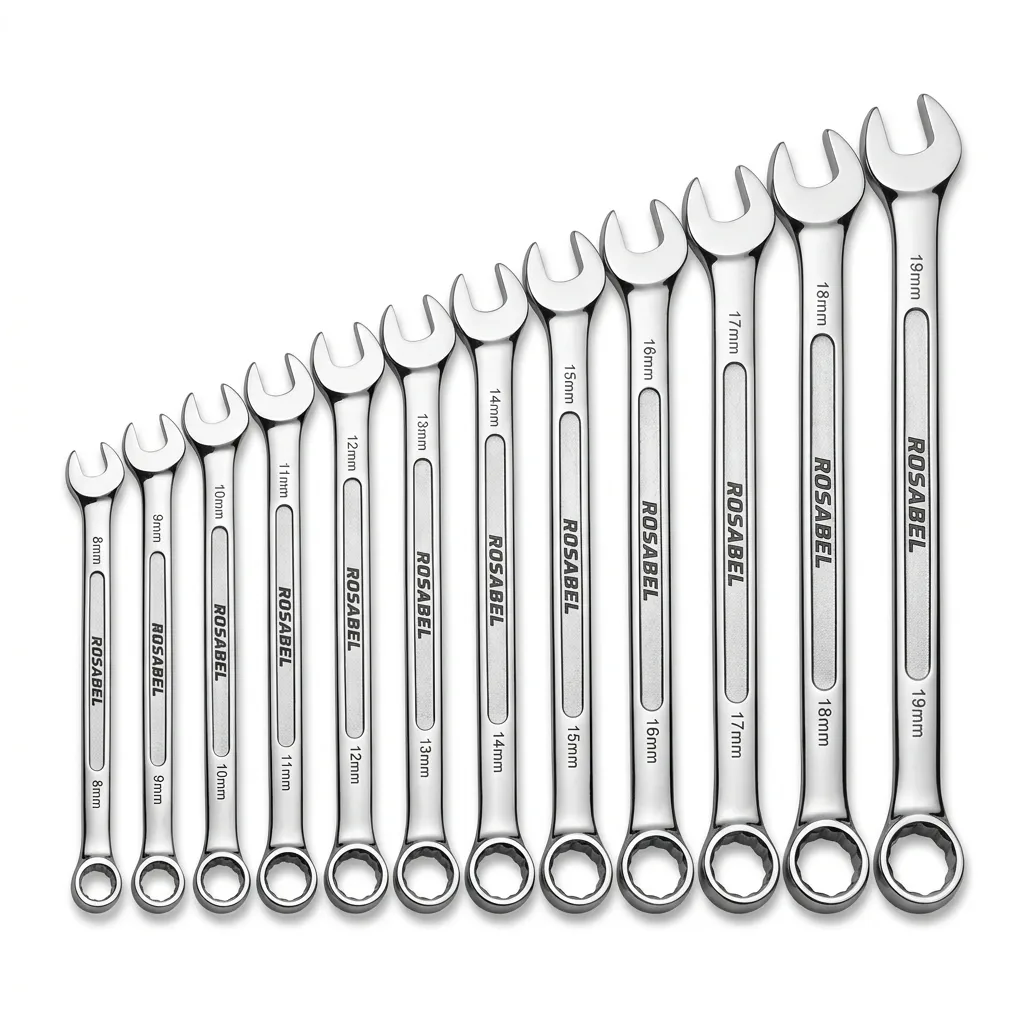
In metric, the middle of the range does most of the work in general repair, so a first order usually starts with sets and singles from about 8 mm to 19 mm, then adds the larger sizes for trucks, agriculture and industrial maintenance. Our combination spanners come in 26 sizes from 6 mm to 32 mm, so you can sell singles or build your own sets.
3. Steel and finish
- Chrome vanadium (CR-V) steel is the usual choice for professional spanners. It combines strength with wear resistance, so the jaws keep their shape.
- Carbon steel is used for budget lines. It costs less, but the jaws are more likely to spread under heavy load.
- Finish: a mirror-polished chrome finish wipes clean easily, while a satin or matte finish gives more grip with oily hands. In both cases the plating should be even, with no bare spots or peeling.
Ask the supplier to state the steel grade and the standard the spanners are made to in the quotation, so you have something to check the samples against.
4. Sets and packaging
How spanners are packed decides where they can be sold.
- Singles on a hanging card suit trade counters and hardware stores where customers replace one size at a time.
- Sets on a rack display well on a retail wall and keep the sizes in order in a workshop. See our combination spanner sets on rack.
- Sets in a roll pouch are popular for vehicle and mobile tool kits because they roll up small.
For private label orders, you can add your logo to the tools and the packaging and choose which sizes go into each set.
5. What to check on samples
- Fit: each size sits on the matching nut with no noticeable play
- Ring end: even wall thickness and a clean, fully formed profile
- Open end: jaws parallel and not spread
- Size markings: clear, correct and easy to read
- Plating: even and smooth, no peeling at the edges
- Ratcheting models: the ratchet turns smoothly and holds under load
- Straightness: the spanner lies flat with no twist
Questions to ask your spanner supplier
- What steel grade do you use, and what is the hardness?
- Which sizes do you keep in stock, in metric and in inch?
- Can I choose which sizes go into a set?
- What packaging options are available for singles and sets?
- What is the MOQ for stock items and for my own logo?
- Which certificates or test reports can you provide for my market?
FAQ about spanners
What is the difference between a spanner and a wrench?
They are the same tool. “Spanner” is the usual word in the UK, Australia, India and much of Africa and the Middle East, while “wrench” is used in North America.
What is the difference between a combination spanner and a ring spanner?
A combination spanner has an open end and a ring end of the same size. A double ring spanner has a ring at both ends in two different sizes, which grips the fastener on all sides and is better where an open end might slip.
Which spanners should a distributor stock first?
Start with combination spanner sets in the common metric sizes, plus singles of the sizes your customers replace most often. Add double ring sets and ratcheting sets once you see demand. If you also stock adjustable wrenches, our adjustable wrench guide covers sizes and jaw checks.
Can spanners be supplied with our own brand?
Yes. We can mark your logo on the spanners and supply them in your own packaging. In-stock items start from 100 pcs per item, and the MOQ for OEM orders is confirmed with your quotation.
Talk to us about spanners
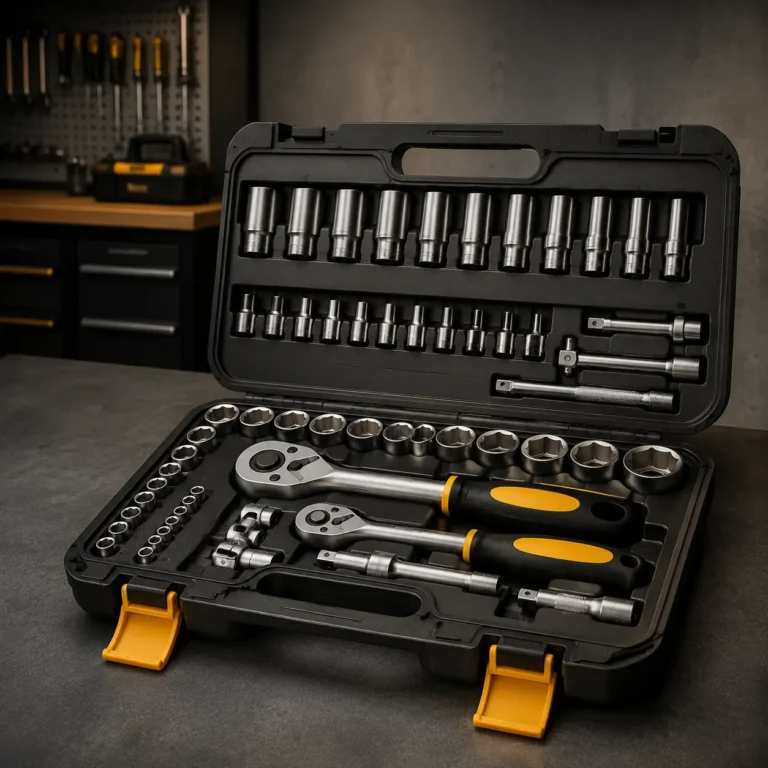
ROSABEL supplies combination spanners, ring spanner sets, ratcheting wrench sets, adjustable wrenches and socket sets from Ningbo, China. Browse the full range of wrenches, spanners and sockets. Tell us your market and the sizes you need, and we will send details and a quotation.