Tin Snips Guide: Aviation vs Tinman Snips, Cut Directions and Capacity
Tin snips are hand shears for cutting sheet metal. Roofers, HVAC installers, gutter fitters, metal stud framers and DIY users all need them, which makes them a steady seller in hardware and trade ranges. But “tin snips” covers two quite different tools: traditional tinman snips and compound-action aviation snips. Stocking the right mix is what keeps returns low and repeat orders coming.
This guide explains the types of tin snips, how left, right and straight-cut aviation snips differ, what thickness they cut and what to check on samples.
What are tin snips used for?
Tin snips are hand shears for cutting thin sheet metal: steel and galvanised sheet, aluminium, copper and tin, as well as metal mesh and plastic sheet. Roofers use them for flashing, HVAC installers for ductwork, gutter fitters for downpipes and framers for metal studs.
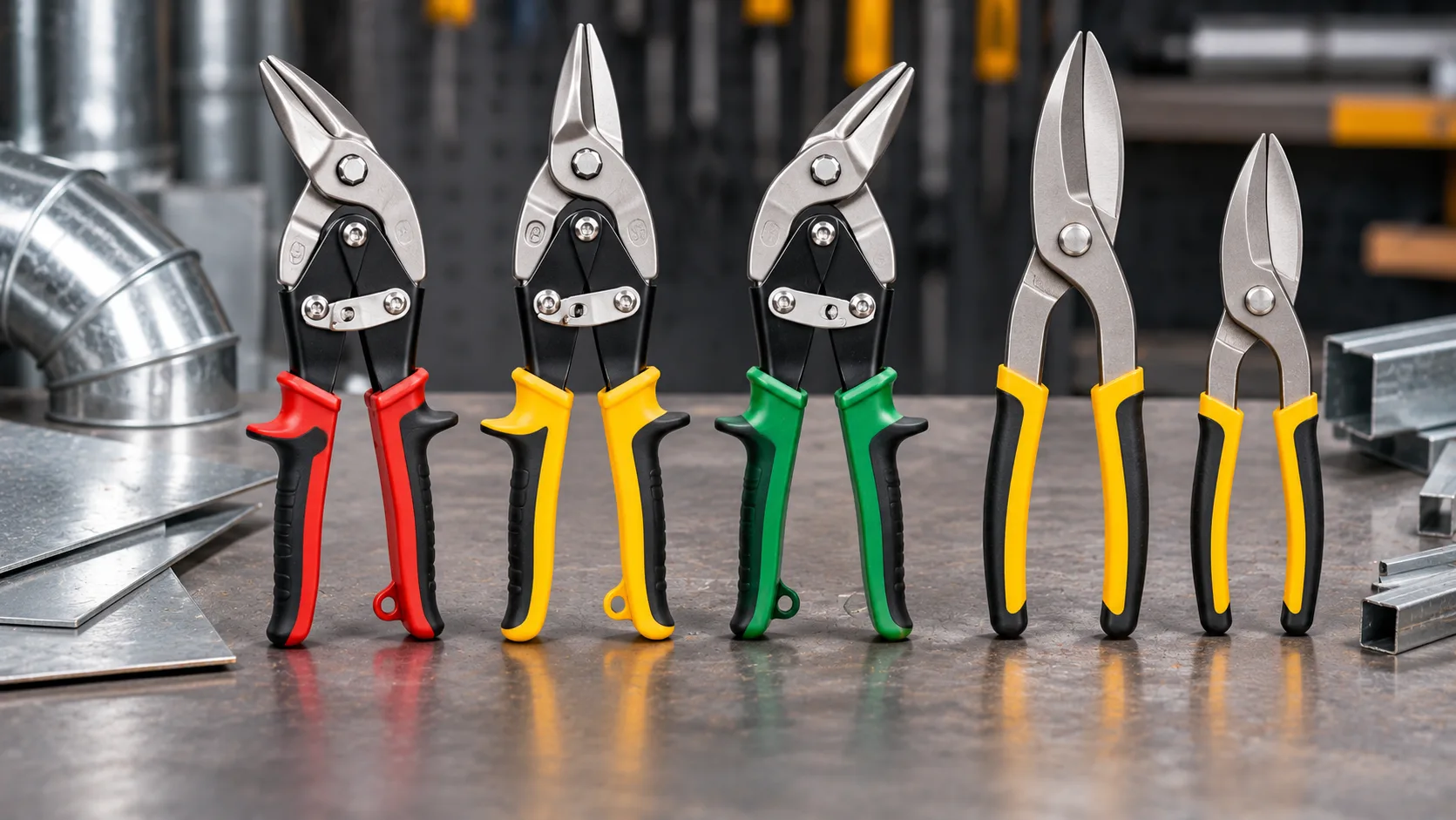
Aviation tin snips are a compound-action type: a double pivot multiplies hand force, so they cut with less effort and handle curves and notches. Their colour-coded handles show the cut direction: left, right or straight.
Tinman snips vs aviation snips
| Tinman snips | Aviation snips | |
|---|---|---|
| Action | Simple pivot, like scissors | Compound linkage multiplies hand force |
| Length | Usually 8″–14″ | Usually about 10″ |
| Best cut | Long straight cuts in thin sheet | Curves, notches and tighter cuts with less effort |
| Typical users | Roofers, tinsmiths, general trades | HVAC, metal framing, gutter and duct work |
| Colour code | None | Left (often red), right (often green), straight (often yellow) |
Left, right and straight cut: which one?
- Left-cut snips cut curves to the left and straight lines; the waste curls away to the right.
- Right-cut snips cut curves to the right and straight lines.
- Straight-cut snips cut straight lines and wide curves in either direction.
Professionals usually buy all three, so a 3-piece set or a display with all three is the easiest way to sell aviation snips. For DIY customers, a straight-cut snip alone is often enough.
What can tin snips cut?
Capacity depends on the snip and the metal. As a guide, good quality snips handle mild steel sheet up to about 0.8–1.2 mm, aluminium and copper sheet a little thicker, and stainless steel noticeably thinner. Always print the rated capacity on the packaging so customers do not overload the tool. For thicker sheet, recommend a power shear or nibbler.
Blades, grips and finish
- Blade steel: look for CR-V or forged steel with a stated hardness; our aviation snips use CR-V blades at HRC 56–62.
- Serrated edges stop the sheet slipping out of the jaws.
- Spring and lock: aviation snips should open automatically and lock closed for safe storage.
- Grips: dipped grips are economical; two-component grips feel better in professional ranges.
Our tin snips range
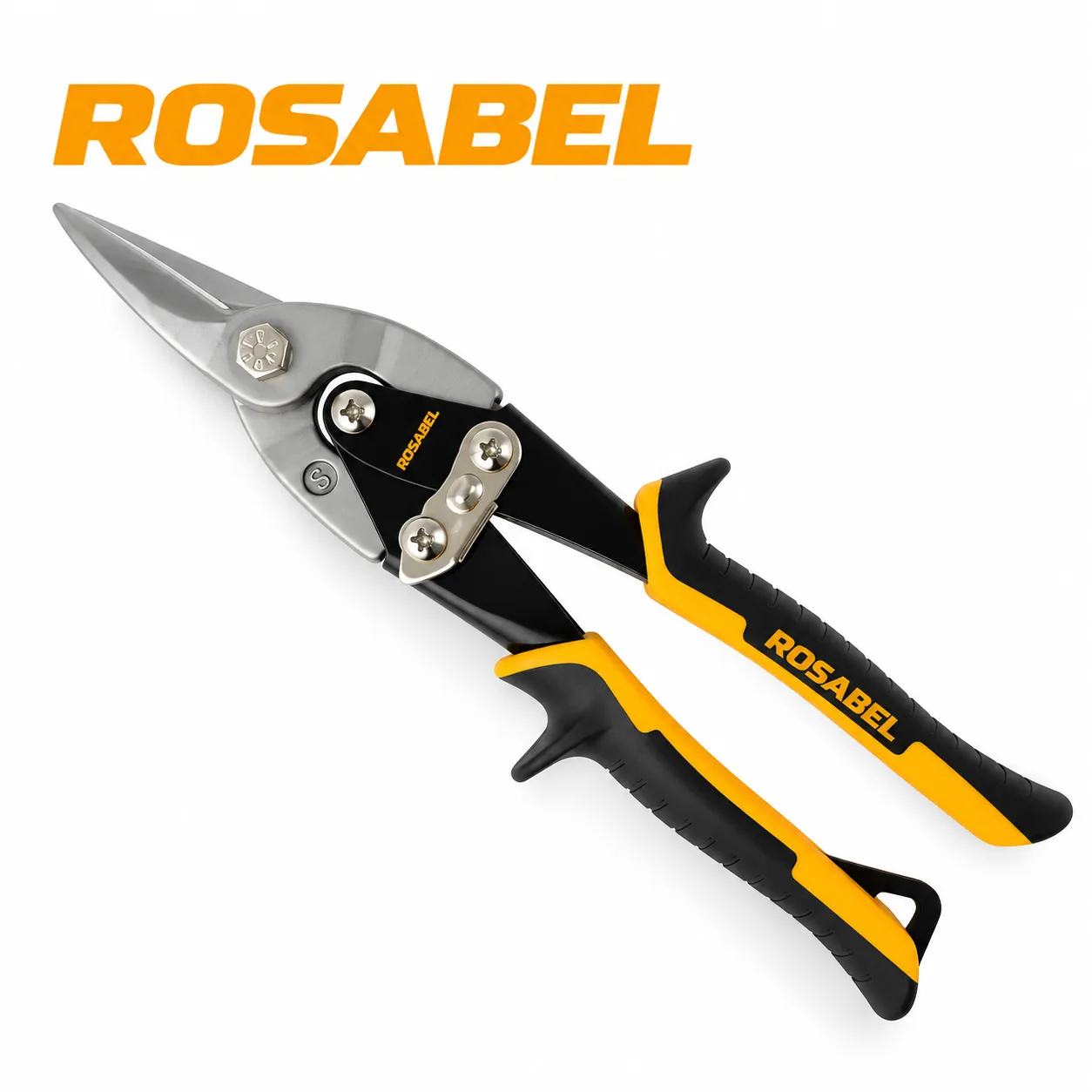
- Aviation Snips, 10″, Left, Straight and Right Cut: CR-V blades, compound action, soft-grip handles with lock.
- Tinman’s Snip, Forged Blades: 8″, 10″ and 12″ for long straight cuts.
- Tinman’s Snip, Heavy Duty: 10″ and 12″ for thicker sheet and flashing.
- Tin Snip, 8″: compact spring-loaded snip for light work.
Sample checks before you order
- Cut the sheet your customers use (steel, aluminium, galvanised) at the rated thickness.
- Check that the blades close fully to the tip with no gap and no side play at the pivot.
- On aviation snips, check that the cut direction matches the handle colour.
- Open and close the lock 20–30 times; it should not jam or loosen.
- Check the grip does not twist on the handle.
Tin snips FAQ
What are tin snips used for?
Cutting sheet metal such as roofing, gutters, flashing, ducting and metal studs.
What is the difference between aviation snips and tin snips?
Aviation snips use compound leverage to cut with less effort and come in left, right and straight versions; tinman snips are simple pivot shears for straight cuts.
Which colour is left-cut?
By common convention red is left-cut, green is right-cut and yellow is straight-cut.
Can tin snips cut stainless steel?
Only thin stainless sheet; capacity is lower than for mild steel.
Talk to us about tin snips and aviation snips
We supply tin snips and aviation snips to importers, distributors and retailers, with OEM/ODM, private label and custom packaging. In-stock items start from 100 pcs, and samples are ready in 5 to 7 days. Tell us your market, sizes and quantities, and we will send a quotation and sample plan.