Bypass vs Anvil Pruners: Which to Use, Which to Stock
Bypass or anvil? It is the first question in every pruning shears range, and the most common one gardeners ask. The two types look similar on the shelf but cut in different ways, and stocking the wrong mix leads to unhappy customers and returns.
We supply pruning shears, loppers and tree pruners from Ningbo. This guide explains bypass vs anvil pruners, when to use each, and how to build a pruning range for garden centres and hardware stores.
Bypass vs anvil pruners: the difference
| Bypass pruners | Anvil pruners | |
|---|---|---|
| How they cut | Two curved blades pass each other like scissors | A straight blade closes onto a flat anvil, like a knife on a board |
| Cut quality | Clean cut that heals well | Can crush soft green stems |
| Best for | Live, green stems and branches | Dead, dry and hard wood |
| Effort | Normal | Often less effort on hard, dry wood |
| Typical users | Roses, shrubs, fruit trees, flower beds | Clearing dead wood, rough pruning |
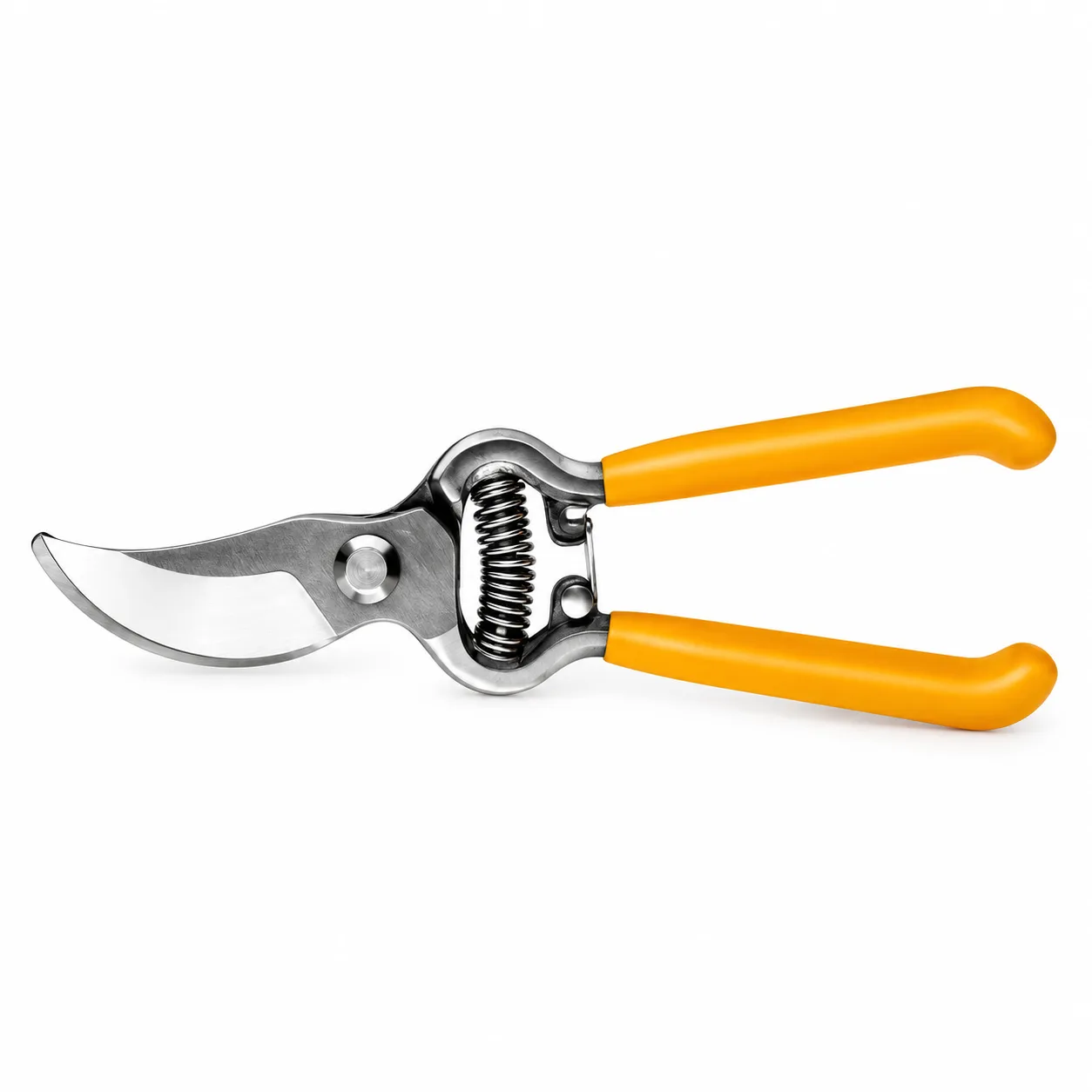
When to use bypass pruners
Bypass pruners are the standard choice for most gardeners. Because the blades pass each other, they make a clean cut that heals well, which matters on roses, hydrangeas, fruit trees and shrubs. Most pruning ranges are built around bypass models in 7.5″ and 8″. See our forged 8″ bypass pruner and 7.5″ bypass pruner.
When to use anvil pruners
Anvil pruners are useful for dead and dry wood, where a clean cut does not matter and the anvil design takes less effort. They are a good second tool, not a replacement for bypass pruners. See our 7.5″ anvil pruner.
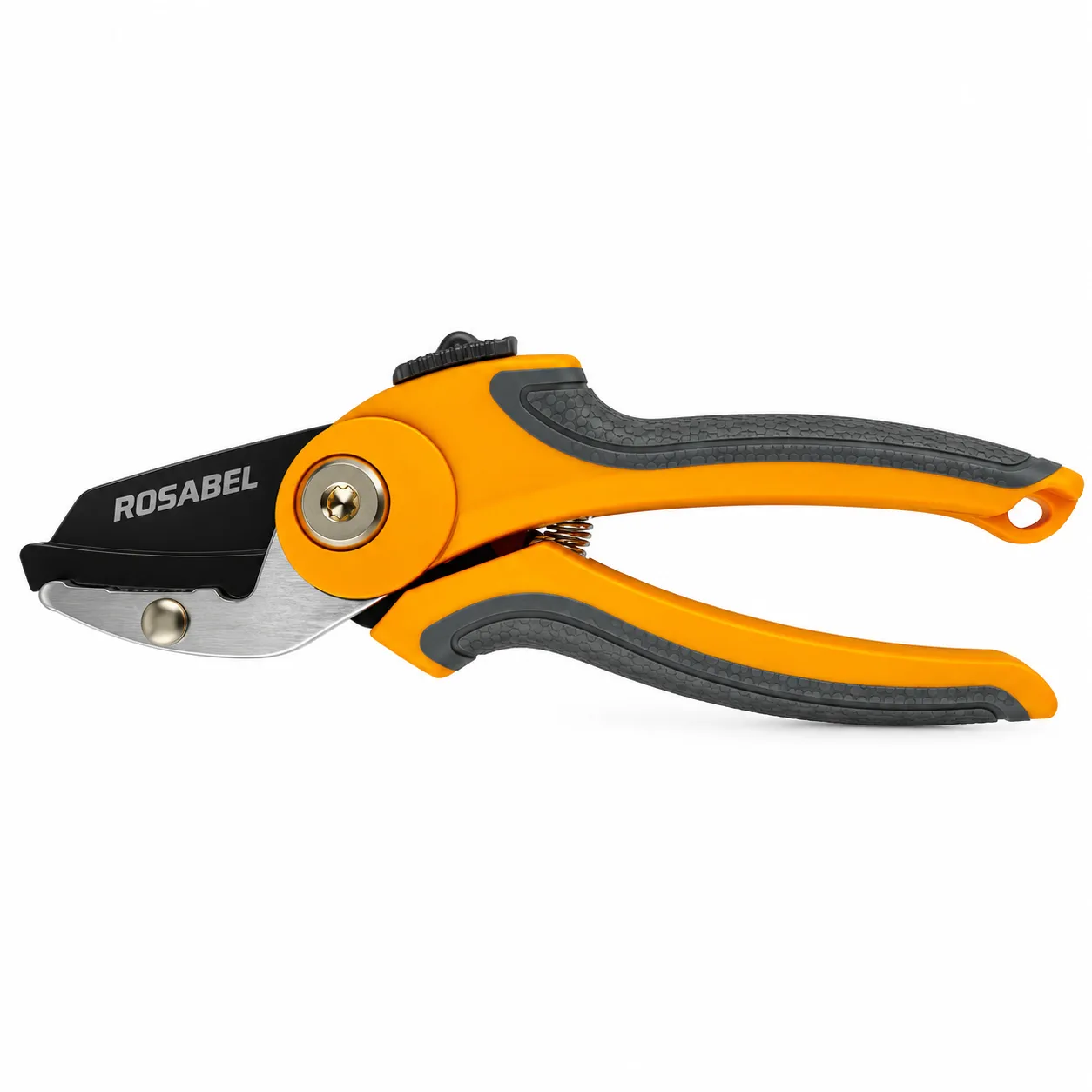
Pruners, loppers and pole pruners
| Tool | Branch size | Our model |
|---|---|---|
| Hand pruners (secateurs) | Small stems and branches | 8″ pruning shears |
| Loppers | Thicker branches, two-handed | Telescopic bypass lopper |
| Pole pruners | Branches out of reach | Telescopic tree pruner with saw |
How to build a pruning range
- Two or three bypass pruners at different sizes and handle styles, including a 7.5″ for smaller hands.
- One anvil pruner for dead wood.
- One bypass lopper, fixed or telescopic, for thicker branches.
- A pole pruner for garden centres with fruit-tree customers.
- Clear labels that say “bypass: for live wood” or “anvil: for dead wood”. This one detail reduces returns.
How to keep pruning shears sharp
A short care note on the card or box helps customers and reduces complaints:
- Wipe blades clean after use and remove sap with a little oil or cleaner.
- Disinfect blades between diseased plants.
- Sharpen the bevelled edge of a bypass blade with a fine sharpening stone, following the original angle; do not sharpen the flat inner face.
- Check the pivot nut and oil the joint now and then.
- Store dry, with the safety lock closed.
What to check on pruner samples
- Blade steel and hardening; the cutting edge should stay sharp after test cuts on dry wood.
- Blade alignment: bypass blades should pass close together without a gap.
- Spring and safety lock: smooth opening and a lock that does not engage by accident.
- Handle grips and colours that match your range.
- Packaging: blister card, hanging card or colour box with your brand.
Bypass vs anvil pruners: FAQ
Which is better, bypass or anvil pruners?
Neither is better for everything. Bypass pruners are best for live green stems; anvil pruners are best for dead, dry wood.
Which pruners are best for roses and hydrangeas?
Bypass pruners, because they make a clean cut on live stems.
Are pruning shears and secateurs the same?
Yes. “Secateurs” is the usual name in the UK and Europe; “pruning shears” or “pruners” in North America.
How do you sharpen pruning shears?
Use a fine stone on the bevelled edge, following the original angle, and keep the flat face flat.
Can you supply pruning shears with our brand?
Yes: your logo, handle colours and packaging. In-stock items start from 100 pcs.
Talk to us about pruning shears and loppers
We supply pruning shears and loppers to importers, distributors and retailers, with OEM/ODM, private label and custom packaging. In-stock items start from 100 pcs, and samples are ready in 5 to 7 days. Tell us your market, sizes and quantities, and we will send a quotation and sample plan.