Types of Pliers: 12 Common Pliers, Their Uses and How to Build a Range
Walk into any hardware store and you will find a whole wall of pliers. For a buyer building a range, the question is not only what types of pliers exist, but which ones your customers actually use, and how to cover them without stocking dozens of overlapping models.
We make and supply pliers in Ningbo for importers, distributors and retailers. This guide explains the common types of pliers, what each one does, who uses it, and how to build a sensible pliers range.
Types of pliers at a glance
| Type | What it does | Typical users |
|---|---|---|
| Combination pliers | Grips, bends and cuts wire | Everyone: the basic plier in every toolbox |
| Long nose (needle nose) pliers | Reaches into tight spaces, bends small wire | Electricians, electronics, jewellery, DIY |
| Diagonal cutting pliers (side cutters) | Cuts wire and cable ties close to the surface | Electricians, installers, assembly lines |
| Lineman pliers | Heavy gripping and cutting, high leverage | Electricians and linemen |
| Locking pliers | Clamp and lock onto a part hands-free | Mechanics, welders, plumbers |
| Groove joint (tongue and groove) pliers | Adjustable jaws for pipes and large nuts | Plumbers and maintenance |
| Water pump pliers (box joint) | Same job as groove joint, stronger joint | Plumbers and heavy maintenance |
| Circlip pliers | Fit and remove retaining rings | Mechanics and machinery repair |
| End cutting pliers (tower pincers) | Pull nails and cut wire flush | Builders, carpenters, rebar fixers |
| Fence pliers | Hammer, pull staples, cut and twist wire | Farmers and fencing contractors |
| Wire strippers and crimpers | Strip insulation and crimp terminals | Electricians and car wiring |
| Punch and eyelet pliers | Punch holes and set eyelets | Leather, belts, crafts and tarpaulins |
1. Combination pliers
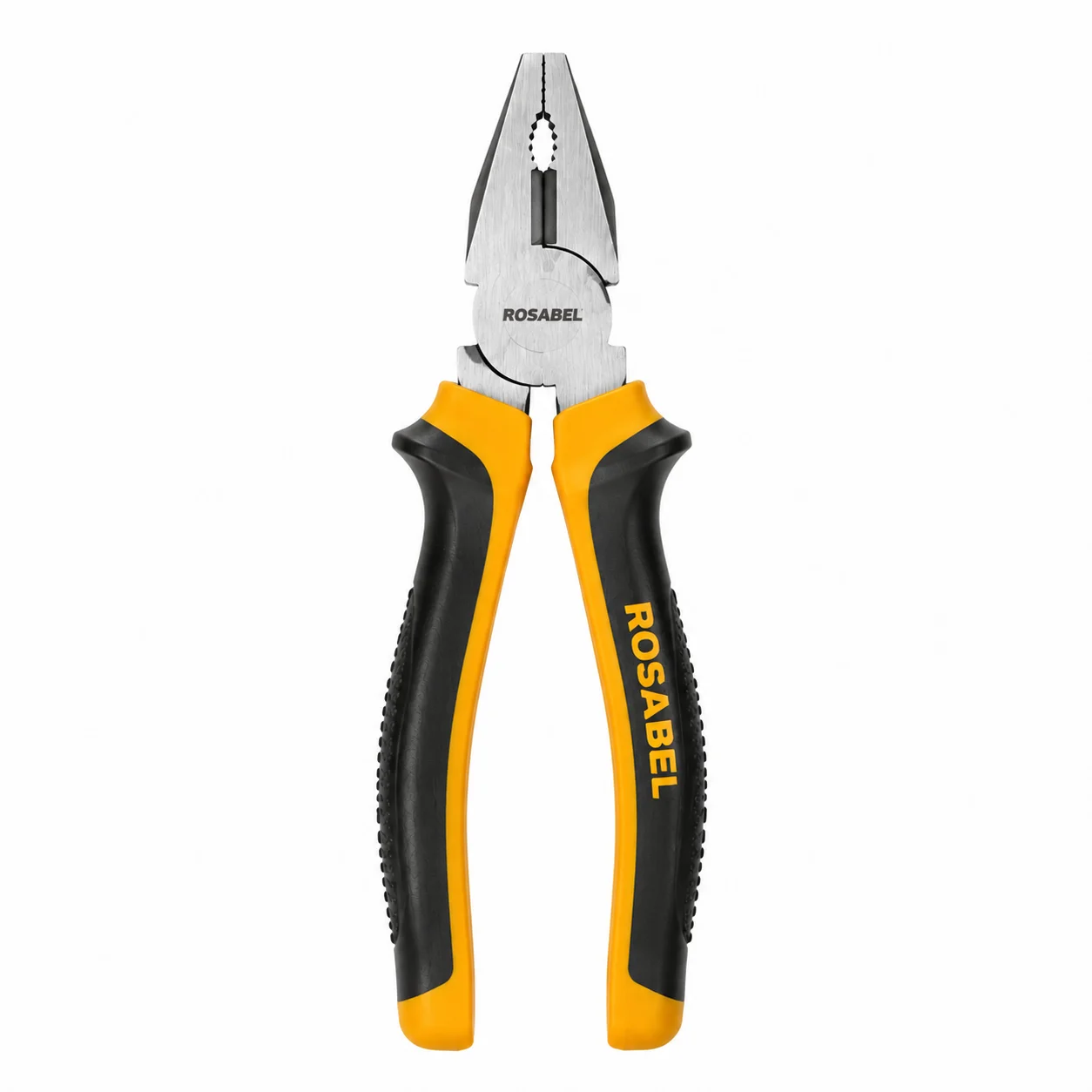
Combination pliers have a serrated gripping jaw, a pipe-gripping section and a side cutter near the pivot. They are the best-selling plier in almost every market and come in 6″, 7″ and 8″. See our combination pliers and, for a comparison with lineman pliers, our guide to combination vs linesman pliers.
2. Long nose (needle nose) pliers
In the US these are usually called needle nose pliers; in Europe, long nose pliers. The long, slim jaws reach into boxes and tight corners, bend loops in small wire and hold small parts. Most have a side cutter. Typical sizes are 6″ and 8″. See our long nose pliers.
3. Diagonal cutting pliers (side cutters)
Diagonal cutters have no gripping jaw at all: just two angled cutting edges that cut wire and cable ties close to the surface. Electricians use them every day. Flush cutters are a lighter version for plastic parts. See our diagonal cutting pliers.
4. Lineman pliers
Lineman pliers are a heavier combination plier with a flat nose and strong cutters, made for twisting and cutting thicker wire. High-leverage designs move the pivot closer to the jaws to reduce cutting effort. See our multipurpose lineman pliers.
5. Locking pliers
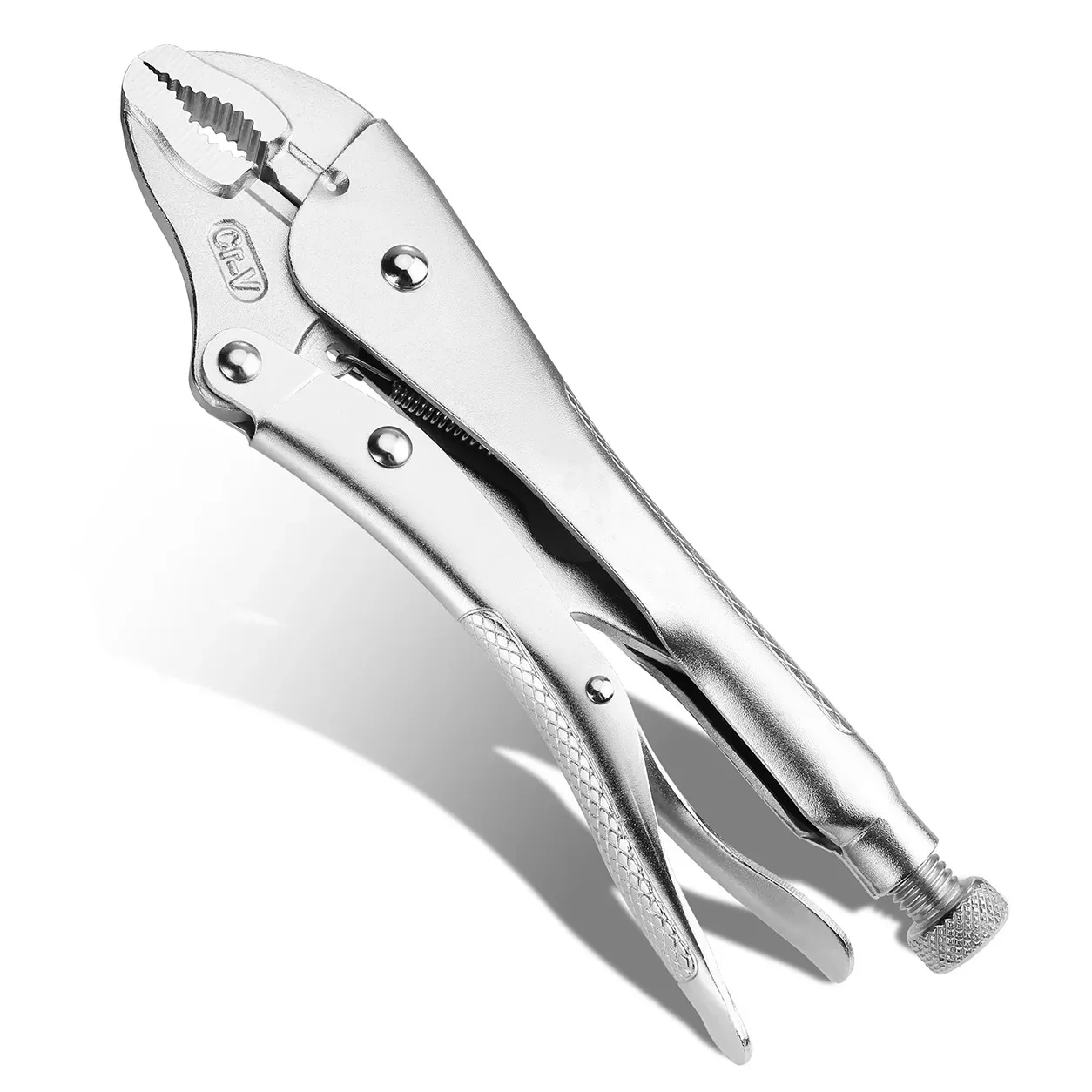
Locking pliers clamp onto a part and stay locked, so the user has both hands free. Mechanics use them to free seized bolts, welders use them to hold parts in place, and plumbers use them as a portable clamp. Common jaw types are curved, long nose, C-clamp, chain and sheet metal. Our locking pliers guide explains each type, and our curved jaw locking pliers are the standard model.
6. Groove joint and water pump pliers
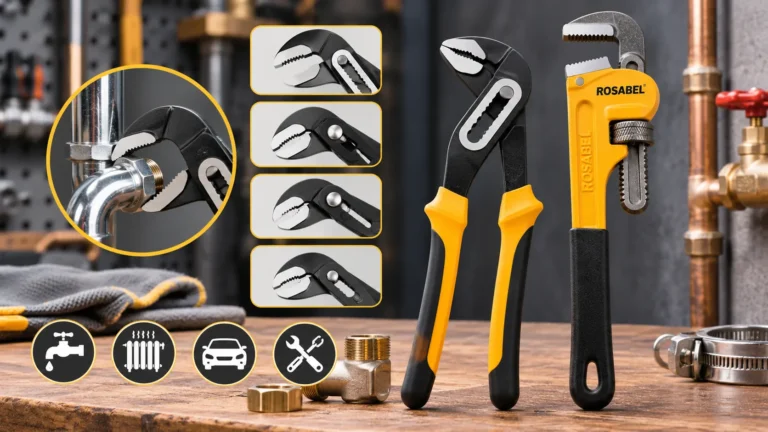
These pliers have adjustable jaws that open wide for pipes, fittings and large nuts. Groove joint pliers (also called tongue and groove pliers) slide between grooves; box joint water pump pliers pass one jaw through the other, which makes the joint stronger. See our groove joint pliers, box joint water pump pliers and the water pump pliers guide.
7. Circlip pliers
Circlip pliers have pointed tips that fit into the holes of a retaining ring. Internal pliers close to fit rings inside a bore; external pliers open to fit rings on a shaft. Sets with straight and bent tips cover most jobs. See our circlip pliers set.
8. End cutting pliers and fence pliers
End cutting pliers, also called tower pincers, have a round head with cutting edges at the end: builders use them to pull nails and cut wire flush. Fence pliers combine a hammer face, staple puller and wire cutters for farm fencing. See our tower pincers and fence pliers.
9. Wire strippers, crimpers and punch pliers
Wire strippers remove insulation without cutting the copper; many also crimp terminals. Automatic strippers grip and strip in one squeeze. Punch pliers make round holes in leather and fabric, and eyelet pliers set the eyelets. See our wire stripper guide and crimping tool guide.
How to build a pliers range
- Start with the core three: combination, long nose and diagonal cutting pliers, in 6″ and 8″. They sell everywhere.
- Add a 3-piece set of the same three pliers for gift and DIY shelves.
- Add locking pliers and groove joint pliers for mechanics and plumbers.
- Add trade specials for your market: lineman pliers for electricians, tower pincers for builders, fence pliers for farm stores.
- Choose one handle style per line (for example dipped, soft grip or bi-colour) so the range looks consistent on the shelf.
What to check on pliers samples
- Steel: carbon steel or chrome vanadium (CR-V), and whether the jaws are induction-hardened.
- Cutting edges: they should meet along their full length and cut paper-thin copper wire cleanly.
- Joint: smooth movement without side play.
- Handles: secure grips that do not twist; check insulated ratings if the pliers are sold for electrical work.
- Finish and marking: even plating or blackening, clear size marking and your logo where agreed.
Types of pliers: FAQ
What are the most common types of pliers?
Combination pliers, long nose (needle nose) pliers and diagonal cutting pliers. Most buyers start with these three.
What is the difference between long nose and needle nose pliers?
They are the same tool. “Needle nose” is the usual name in the US; “long nose” is more common in Europe.
Which pliers are used to cut electrical wire?
Diagonal cutting pliers, lineman pliers or the cutter on combination pliers. For stripping insulation, use a wire stripper.
Who uses locking pliers?
Mechanics, welders, plumbers and DIY users, whenever a part must be held firmly with both hands free.
Can you make pliers with our logo?
Yes. We mark your logo on the tool and make your own handle colours, cards and boxes. In-stock items start from 100 pcs.
Talk to us about pliers
We supply pliers to importers, distributors and retailers, with OEM/ODM, private label and custom packaging. In-stock items start from 100 pcs, and samples are ready in 5 to 7 days. Tell us your market, sizes and quantities, and we will send a quotation and sample plan.